
Teak wood vs sheesham wood is one of the most consistently agreed-upon comparisons in Indian furniture buying, and for once nearly every source lines up on the same conclusion without much contradiction. Teak wins on water resistance, termite protection, longevity and low maintenance. Sheesham wins on price and carving flexibility. The real question isn’t which wood is “better,” it’s whether your furniture needs to survive outdoors or decades of humidity without upkeep, or whether it’s going into a dry indoor room where sheesham’s lower cost genuinely makes more sense.
What Makes Each Wood Different at the Source
The core difference comes down to natural oil content, and that single factor explains nearly everything else in this comparison.
- Teak contains a high concentration of natural oils and silica, which is exactly what gives it water resistance and termite protection without needing chemical treatment.
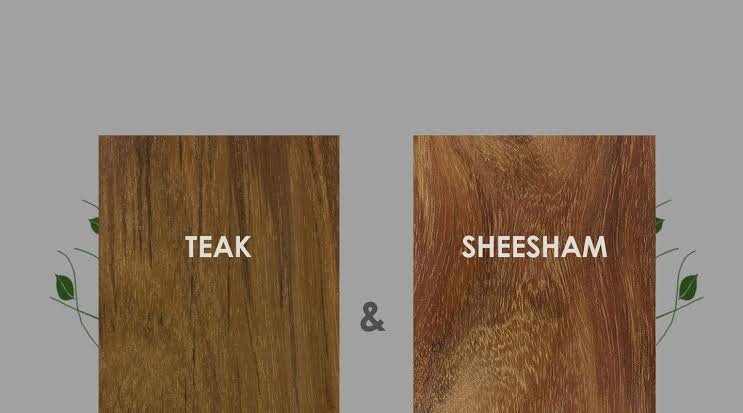
- Sheesham, also called Indian rosewood, is a fast-growing hardwood from Northern India with a naturally wavy, irregular grain pattern in warm golden-brown to reddish-brown tones.
- Teak’s oil content also gives freshly milled wood a distinctive leather-like smell, a genuine, documented characteristic of the species rather than a marketing claim.
- Sheesham’s lower density, compared to teak, makes it genuinely easier to carve into intricate designs, a real practical advantage for detailed or decorative furniture work.
Water and Termite Resistance: Where Teak Clearly Wins
Every source checked agrees on this point, with only the degree of difference varying slightly.
- Teak’s natural oils make it highly resistant to water, moisture and termites without requiring chemical treatment, which is why it remains the standard choice for outdoor and boat-building applications historically.
- Sheesham has good to moderate termite resistance on its own, better than many softwoods, but it’s genuinely more vulnerable to termite attack and moisture if not properly treated and maintained in humid climates.
- Both woods carry some natural termite resistance, which already puts them ahead of untreated engineered wood, but teak’s protection holds up without ongoing upkeep while sheesham’s needs periodic polishing or varnishing to stay effective.
- This is precisely why teak is recommended for outdoor or semi-outdoor furniture, while sheesham is consistently restricted to indoor use across every source.
Durability and Lifespan
The gap here is real, though it narrows considerably depending on how the furniture is actually used.
- One detailed comparison quotes sheesham furniture lasting 20-30 years with proper care, against 40-50 years or more for teak furniture.
- For indoor furniture kept in normal, non-humid conditions, one source notes well-seasoned sheesham performs comparably to teak, suggesting the durability gap matters most specifically in outdoor or high-humidity scenarios rather than universally.
- Sheesham can crack if not stored and maintained in sufficiently dry conditions, a genuine vulnerability teak doesn’t share given its natural oil protection.
- Teak wood tends to wear out cutting tools faster during manufacturing, a direct consequence of its density, which also explains why intricate carved designs come out looking more distinguished in sheesham than in teak.
Cost: A Genuinely Large Gap
This is where sheesham makes its strongest case, and the price difference is substantial, not marginal.
- Teak is expensive specifically because it grows slowly, has limited availability, and remains in consistently high demand both domestically and for export.
- Sheesham is significantly more affordable while still offering genuine hardwood durability and visual appeal, making it the practical choice for the majority of Indian furniture buyers.
- One concrete Indian example illustrates the gap clearly: a sheesham wood bed priced around ₹19,296 against a comparable teak wood bed at roughly ₹1,55,000, nearly an eightfold difference for a similar piece.
- Consistent with the cost-per-year logic that’s shown up repeatedly across this materials series, one source frames teak’s higher upfront cost as being offset by “near-zero replacement cost over decades,” worth weighing against sheesham’s lower initial price but shorter expected lifespan.
Maintenance Requirements
This follows directly from the water and termite resistance difference covered above.
- Teak wood is considerably easier to maintain than sheesham, since its natural oils provide ongoing protection without regular intervention.
- Sheesham furniture typically needs a coat of furniture wax and periodic polishing to maintain both its appearance and its resistance to moisture and pests over time.
- For dust and routine care, sheesham specifically benefits from weekly dusting with a dry or slightly damp microfibre cloth, a more hands-on maintenance routine than teak generally requires.
- If low ongoing maintenance matters more to you than upfront cost, this is a genuine factor tilting the decision toward teak even for indoor furniture.
Where Each Wood Actually Gets Used
Matching the wood to the furniture type is where this comparison becomes genuinely practical.
- Sheesham is the standard choice for beds, cabinets, traditional Indian furniture, and smaller decorative or carved pieces, where its grain pattern and affordability both work in its favour.
- Teak is reserved for outdoor furniture, luxury and heavy-duty pieces, and anywhere long-term durability with minimal maintenance genuinely justifies the premium price.
- Availability also plays a role, sheesham is widely and easily available across India, while teak’s more limited supply contributes directly to its higher cost.
- Neither wood is inherently “wrong” for indoor use, the choice there comes down more to budget and how much carved detail or decorative work the piece needs.
Choosing the Right Wood for Your Furniture
The decision comes down to where the furniture is going and how much upkeep you’re genuinely willing to commit to.
- Choose teak for outdoor or semi-outdoor furniture, high-humidity environments, and any piece where you want decades of service without ongoing maintenance.
- Choose sheesham for indoor furniture, intricately carved or decorative pieces, and budget-conscious purchases where teak’s premium price isn’t justified by the use case.
- Factor in your willingness to maintain the piece, since sheesham’s lower cost comes with a real ongoing maintenance commitment that teak largely avoids.
FAQs
Q1. Can sheesham wood furniture be used outdoors like teak?
No, this is consistently discouraged across every source. Sheesham’s moderate water resistance and termite protection aren’t sufficient for sustained outdoor exposure, and teak remains the preferred wood for any outdoor or semi-outdoor furniture application specifically because of its natural oil content.
Q2. Why is teak so much more expensive than sheesham in India?
Mainly because teak grows slowly, has more limited availability, and stays in consistently high demand both within India and for export, while sheesham is a comparatively fast-growing, more widely available hardwood. One concrete example shows a sheesham bed priced at roughly ₹19,000 against a comparable teak bed at over ₹1.5 lakh.
Q3. Does sheesham furniture really need more maintenance than teak?
Yes, genuinely. Teak’s natural oil content provides ongoing water and termite resistance without regular treatment, while sheesham typically needs periodic polishing, varnishing or waxing to maintain both its appearance and its protection against moisture and pests over time.
Q4. Is sheesham wood actually weaker or less durable than teak for everyday indoor furniture?
Not necessarily for indoor use specifically. One source notes that well-seasoned sheesham performs comparably to teak in normal indoor conditions, and the durability gap, quoted as roughly 20-30 years for sheesham against 40-50 years for teak, matters most in outdoor or genuinely high-humidity environments rather than typical indoor settings.