
Powder coated vs anodized window finish is a question about how the protective layer actually sits on the aluminium. Anodizing becomes part of the metal itself through an electrochemical process. Powder coating sits on top as a separate, cured layer. That structural difference is what decides scratch resistance, repairability and, in India specifically, how well a window survives a coastal city.
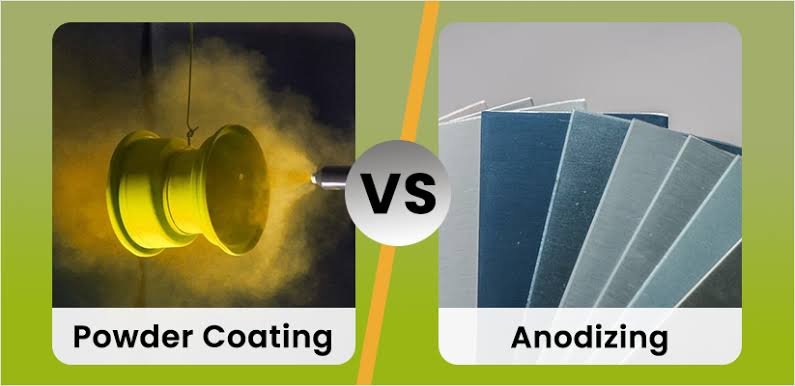
How Each Finish Is Actually Applied
The manufacturing process is the root cause of every performance difference that follows.
- Anodizing creates an oxide layer that’s chemically bonded into the aluminium substrate, not applied as a coating sitting on top of it.
- Powder coating electrostatically applies dry powder to the frame, then cures it at high heat, around 200°C, forming a hard shell layer over the metal.
- Because anodizing is integral to the metal, it can’t really be repainted once damaged, the finish and the substrate are effectively one thing.
- Powder coating, being a separate layer, can chip or scratch, and if that exposes the bare aluminium underneath, corrosion can start at that point.
Durability and Lifespan: Where Sources Genuinely Disagree
Every source agrees on direction, anodized generally outlasts powder coating, but the actual year figures swing wildly enough that you shouldn’t trust any single number.
- One India-specific source puts anodized aluminium at 50+ years and powder coated at 40-50+ years, a fairly narrow gap.
- A cladding-focused source instead quotes anodized at 20-30 years and powder coated at just 10-15 years, a much wider gap.
- A technical guide notes powder coating lifespan “varies by powder type and conditions” across a huge 5 to 30 year range, and separately warns that AAMA 2603-grade powder coat “fails outdoors within months” in harsh conditions, while the better 2605 grade lasts up to 10 years even in harsh environments.
- Given this spread, the grade and brand of coating used matters more than the generic “powder coated vs anodized” label, ask your supplier specifically which AAMA-equivalent standard or coating thickness they’re using.
Scratch, Chip and Corrosion Resistance
This is where the structural difference described above translates into real-world performance, and sources agree more consistently here.
- Anodized surfaces are described as extremely hard and highly abrasion and scratch-resistant, since the finish is integrated with the metal rather than sitting on it.
- Powder coating is “good but can chip or scratch,” and once chipped, the exposed aluminium underneath becomes a corrosion starting point.
- In salt spray testing, anodized finishes are generally rated more corrosion-resistant, which is exactly why coastal applications lean toward anodizing or marine-grade powder coat specifically.
- Using standard interior-grade powder coating near the ocean is flagged as a critical mistake, it can fail within six months near salt spray.
Colour Options and Repairability
This is the one category where powder coating clearly wins, and no source disputes it.
- Anodized finishes have a genuinely limited colour palette, mostly silver, champagne gold, bronze and similar metallic tones achieved through electrolytic colouring.
- Powder coating offers far broader colour and texture flexibility, including custom colours, matte finishes and textured options.
- Powder-coated surfaces can be touched up or repainted if damaged, giving practical flexibility for repairs over the window’s life.
- Anodized aluminium is genuinely difficult to repaint or touch up once damaged, since the finish is part of the metal rather than a separate repairable layer.
Cost
Powder coating is consistently the cheaper option, though the premium for anodizing buys real coastal protection.
- Powder coating is described as more cost-effective, particularly for custom colours and smaller production runs, making it the more common choice for typical residential projects.
- Anodizing is a more complex, more expensive process, generally reserved for high-end buildings or demanding environments like coastal or industrial zones.
- A duplex system, anodizing plus powder coating combined, delivers the highest protection but costs roughly 40% more than a single-finish system.
- For budget-sensitive projects, powder coating generally offers the better cost-to-benefit ratio, provided you don’t compromise on coating quality, since cheap powders cost more in maintenance later.
What This Means for Indian Cities Specifically
Climate and proximity to the coast should drive this decision more than aesthetic preference alone.
- Coastal cities, Mumbai, Chennai, Kochi, Visakhapatnam, Goa, call for anodized or marine-grade powder coated finishes specifically; uPVC and standard powder coat degrade faster in direct salt air.
- Humid but non-coastal cities like Kolkata can generally use standard powder coated aluminium, since the risk there is monsoon humidity rather than direct salt spray.
- Hot, dry, inland cities like Nagpur face less of this specific concern, and either finish tends to perform adequately there.
- If your building sits within roughly 300 metres of the ocean, anodized or duplex systems are specifically recommended over standard powder coat, which can fail quickly at that proximity.
Choosing the Right Finish
The decision usually comes down to location and how much colour flexibility you actually need.
- Choose anodized for coastal homes, high-end architectural projects, or anywhere maximum scratch and corrosion resistance matters more than colour choice.
- Choose powder coating for budget-conscious residential projects, custom colour requirements, and non-coastal locations where standard protection is sufficient.
- Choose a duplex system if you’re building directly on the coast and want the longest possible protection, accepting the roughly 40% cost premium.
FAQs
Q1. Which finish actually lasts longer, powder coating or anodizing?
Anodizing generally lasts longer, but exact figures vary enormously by source, from a narrow 40-50 vs 50+ year gap to a much wider 10-15 vs 20-30 year gap elsewhere. The coating grade and thickness used matters as much as which finish type you pick, so ask your supplier for the specific standard they’re using.
Q2. Is powder coating a bad choice for coastal homes in Mumbai or Chennai?
Standard interior-grade powder coating is a poor choice near the ocean and can fail within months. Marine-grade powder coating, specifically formulated for salt exposure, performs much better, and anodized or duplex systems are the safer default for genuinely coastal properties.
Q3. Can a scratched or chipped finish be repaired?
Powder coating can be touched up or repainted relatively easily if damaged. Anodized finishes are much harder to repair once damaged, since the finish is chemically part of the metal rather than a separate layer that can simply be repainted.
Q4. Why does anodizing offer fewer colour choices than powder coating?
Anodizing colours it through an electrolytic process limited mainly to metallic tones like silver, champagne gold and bronze. Powder coating is a separate pigmented layer applied to the surface, which allows for a much wider range of custom colours and textures.