
Water-based paint vs oil-based paint doesn’t have one clean answer, and the sources genuinely disagree on part of it. Both sides agree oil-based paint dries harder initially and resists wear better on surfaces that get touched and scratched constantly. Where they split is on which one actually lasts longer over years, and the honest answer depends on where you’re painting, not just which paint you pick.
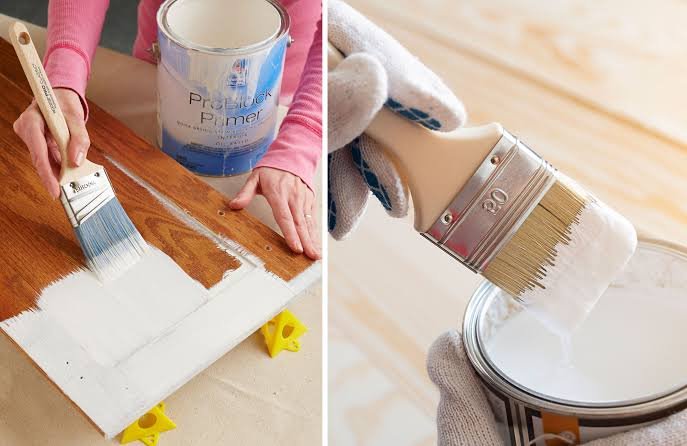
The Core Chemistry Difference
Everything else in this comparison traces back to what each paint is actually made of.
- Oil-based paint, also called alkyd or enamel paint, uses an organic solvent, mineral spirits, linseed oil or turpentine, as its base.
- Water-based paint, commonly called acrylic or latex, uses water as its solvent instead.
- That solvent choice is what drives the differences in drying time, odour, cleanup, and how each paint ages on a surface over time.
- One India-specific source sums up the practical split clearly: oil-based gives a hard, glossy finish known for durability, while water-based is faster-drying and lower-odour.
Durability on High-Wear Surfaces: Oil-Based Still Wins Here
This is the one part of the comparison where sources agree without much contradiction.
- Oil-based paint dries harder, making it more resistant to scratches, chipping and general wear, which is why it’s consistently recommended for trim, cabinets, doors and metal.
- An Indian source quotes oil-based paint lasting 8-12 years against 5-10 years for water-based, specifically on durability grounds for high-wear applications.
- Oil-based paint also has a longer open time, meaning it stays workable longer during application, useful for detailed woodwork where you need time to get the finish right.
- Water-based paint has genuinely closed the gap in recent years, with modern acrylic formulations now drying considerably harder than older versions, though most sources still give the durability edge to oil-based for surfaces that get physically touched and scraped often.
Why Oil-Based Paint Doesn’t Automatically Win Long-Term
This is where the “oil-based is more durable” story gets more complicated, and it’s worth understanding before assuming oil-based is the safer long-term bet everywhere.
- Oil-based paint’s hardness comes at a cost, it’s inflexible, and as it ages it becomes more likely to crack, chip and turn brittle and chalky.
- White oil-based paint specifically tends to yellow and discolour with age, a well-documented weakness that doesn’t affect water-based paint the same way.
- Water-based paint holds its sheen and colour for longer, even though its initial sheen is lower than oil-based paint’s glossier finish.
- One source puts it plainly: water-based paint retains its colour for longer, and a good modern water-based product can genuinely last as long as oil-based paint, provided you choose a quality product.
Indoor Versus Outdoor: Where Sources Genuinely Disagree
This is worth flagging honestly rather than picking a side, because the sources contradict each other here.
- One source states clearly that water-based paint lasts longer indoors because it doesn’t discolour, while oil-based lasts longer outdoors because it withstands weather better.
- Another source argues the opposite for certain exterior substrates: water-based paint adheres better to brick, stone and concrete specifically because of its resistance to alkalis, making it the better choice for masonry.
- A third source goes further, stating water-based paint’s flexibility makes it the better choice for outdoor projects generally, since it won’t crack and become brittle the way ageing oil-based paint does.
- The practical takeaway: the “right” paint for outdoor use in your specific case depends more on the exact surface, wood trim versus masonry versus metal, than on a blanket indoor-versus-outdoor rule.
Application Conditions: A Genuine Consideration for Humid Climates
This matters more in India’s climate than most Western sources acknowledge, since humidity directly affects water-based paint application.
- Water-based paint is sensitive to moisture during application, even a bit of ambient water or high humidity can thin it out since it absorbs water readily.
- Oil-based paint is largely unaffected by extreme temperature, humidity or the presence of water during application, since it repels water rather than absorbing it.
- Drying time differs sharply too: water-based paint can be ready for a second coat in a few hours, while oil-based paint often needs nearly a full day between coats.
- In genuinely humid, monsoon-affected regions, this application sensitivity is worth factoring into your painting schedule, not just your choice of paint type.
Cost, Odour and Cleanup
These practical factors often decide the choice as much as durability does.
- Oil-based paint has a strong, lingering odour that can persist for days, needing thorough ventilation during and after application.
- Water-based paint has a mild odour, making it considerably easier to work with in enclosed or occupied spaces.
- Cleanup differs sharply too: water-based paint washes off tools and surfaces with soap and water, while oil-based paint typically needs thinners or other solvents.
- Partly because of these odour and VOC concerns, oil-based paints have been gradually losing popularity even in applications where they once dominated.
Making the Right Choice for Your Project
The decision usually comes down to the specific surface and how much time you have, more than a blanket preference for one type.
- Choose oil-based for high-wear wood trim, cabinets, doors and metal surfaces where hardness and scratch resistance matter most, and where you can tolerate longer drying times and stronger odour.
- Choose water-based for interior walls, quick turnaround projects, masonry surfaces like brick and concrete, and anywhere low odour and fast drying matter more than maximum initial hardness.
- Factor in your local humidity before scheduling a water-based paint job, since high ambient moisture can thin the paint and affect how well it cures.
FAQs
Q1. Which paint actually lasts longer, water-based or oil-based?
It depends on the surface and location, sources genuinely disagree on this beyond high-wear surfaces. Oil-based wins clearly on wood trim, cabinets and metal where hardness matters, but water-based often outlasts it on walls and masonry since it doesn’t yellow, crack or become brittle the way ageing oil-based paint does.
Q2. Why does white oil-based paint turn yellow over time?
This is a well-documented characteristic of oil-based paint’s chemistry as it ages and cures further over years, something water-based paint doesn’t experience in the same way. If colour retention matters more to you than maximum surface hardness, this is a genuine point in water-based paint’s favour.
Q3. Is it harder to apply water-based paint in humid weather?
Yes, water-based paint is sensitive to ambient moisture during application, since it readily absorbs water, which can thin the paint and affect the final finish. Oil-based paint is largely unaffected by humidity during application, since it repels rather than absorbs water.
Q4. How much longer does oil-based paint take to dry than water-based paint?
Oil-based paint typically needs close to a full day between coats, while water-based paint can often be recoated within just a few hours. One India-specific source quotes 12-24 hours for oil-based against 2-4 hours for water-based.