
India saves its most spectacular show for the monsoon, and the transformation is genuinely dramatic, dry riverbeds that barely trickle in summer suddenly roar back to life as thundering giants once the rains sweep in between June and September. India receives roughly 80% of its annual rainfall during this four-month southwest monsoon window, and for waterfall lovers, that narrow stretch is when the Western Ghats and beyond turn an electric green and dormant falls come thundering back. Here’s a guide to the top 10 waterfalls to visit during monsoon season, along with the practical detail that determines whether your trip is unforgettable or just wet and disappointing.
| Rank | Waterfall | Location | Height/Notable Feature |
| 1 | Dudhsagar Falls | Goa-Karnataka border | 1,020 ft, four-tiered “Sea of Milk” |
| 2 | Jog Falls | Shimoga/Uttara Kannada, Karnataka | India’s tallest un-tiered waterfall |
| 3 | Athirappilly Falls | Kerala | “Niagara of India,” 80 ft |
| 4 | Kynrem Falls | Cherrapunji, Meghalaya | 1,000 ft, three-tiered |
| 5 | Nohkalikai Falls | Meghalaya | Among India’s tallest, seasonal monsoon flow |
| 6 | Barkana Falls | Shimoga, Karnataka | 850 ft, “Cherrapunji of the South” |
| 7 | Thalaiyar Falls | Dindigul, Tamil Nadu | 974 ft, hardest to access |
| 8 | Elephant Falls | Shillong, Meghalaya | Three sequential sections |
| 9 | Barachukki-Gaganachukki | Karnataka | Twin waterfalls, steamy post-monsoon spectacle |
| 10 | Naneghat Reverse Waterfall | Maharashtra | Rare wind-driven upward waterfall |
1. Dudhsagar Falls — The Sea of Milk
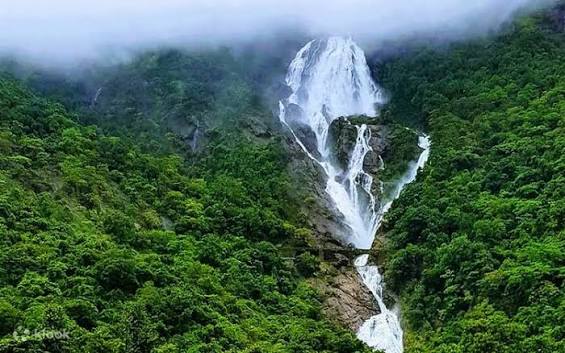
Dudhsagar sits near the Goa-Karnataka border inside the Bhagwan Mahaveer Sanctuary and Mollem National Park, and its name literally means “Sea of Milk,” a description that makes instant sense once you see white water crashing down four levels against dark cliffs.
- Standing at 1,020 feet, it’s one of the most famous and photographed waterfalls in the entire country.
- During monsoon, the Mandovi River overflows, pushing the falls to their absolute full force.
- Visitors can spot the falls directly from a passing train at Dudhsagar railway station, or trek the Kuveshi-Dudhsagar jungle route for a more adventurous approach.
- Important tip: the access road frequently closes during peak monsoon due to flooding, so always check current conditions before heading out.
2. Jog Falls — India’s Tallest Unbroken Waterfall
Jog Falls, located on the district border of Shimoga and Uttara Kannada in Karnataka, is the second-highest plunge and the tallest un-tiered waterfall in India.
- Unlike tiered falls that cascade down in stages, Jog drops as a single, uninterrupted sheet of water, making it genuinely dramatic to witness during peak monsoon flow.
- The surrounding Western Ghats scenery adds considerably to the spectacle, with lush green hills framing the falls on all sides.
3. Athirappilly Falls — The Niagara of India
Often referred to as the “Niagara of India,” Athirappilly Falls becomes dramatically beautiful during the rainy season, with water crashing down nearly 80 feet through thick tropical forest.
- Located in Kerala, surrounded by rich biodiversity that makes the area a genuine nature-lover’s destination beyond just the waterfall itself.
- The forest setting means monsoon visits offer both the roaring falls and vividly green surroundings simultaneously.
4. Kynrem Falls — Meghalaya’s Three-Tiered Giant
Located in Thangkharang Park in Cherrapunji, Meghalaya, Kynrem Falls is a beautiful three-tiered waterfall falling from a height of 1,000 feet, making it one of the highest waterfalls in India.
- Cherrapunji is genuinely one of the wettest places on Earth, so monsoon season here means the falls are at their most powerful and dramatic.
- The three-tiered structure creates a visually striking sight, especially when viewed from the park’s designated viewpoints.
5. Nohkalikai Falls — Among Meghalaya’s Tallest
Nohkalikai Falls in Meghalaya ranks among India’s tallest waterfalls, and like much of the region’s cascades, it depends heavily on seasonal monsoon rainfall to reach its full, dramatic flow.
- The surrounding Meghalaya landscape, lush, mist-covered hills, makes the entire visit feel genuinely otherworldly during the rainy season.
- Best combined with a broader Cherrapunji and Shillong trip given the region’s cluster of major waterfalls.
6. Barkana Falls — The Cherrapunji of the South
Located in the Shimoga district of Karnataka, Barkana Falls is one of the ten tallest waterfalls in India, standing at 850 feet and formed from the Seetha River.
- Primarily known for its role in hydroelectric power generation in Karnataka, giving it genuine practical significance beyond pure scenery.
- An ideal stop for those visiting Agumbe, often called the “Cherrapunji of the South” for its exceptionally heavy rainfall.
7. Thalaiyar Falls — The Hardest to Reach
Also known as Rat Tail Falls, Thalaiyar Falls is located in the Dindigul district of Tamil Nadu and stands at 974 feet, making it one of the tallest waterfalls in India.
- Genuinely difficult to access, there are no roads leading directly to the site.
- The stunning drop combined with surrounding dark caves makes it a uniquely adventurous spot specifically for travellers willing to put in the extra effort to reach it.
8. Elephant Falls — Shillong’s Busiest Monsoon Spot
Situated on the outskirts of Shillong, often called the “Scotland of the East,” Elephant Falls stands out for its three sections flowing in sequence.
- One of the busiest tourist spots in the region, especially during monsoon when the falls are at their most powerful.
- Best time to visit is generally cited as November to February, though the monsoon spectacle itself draws considerable crowds despite that recommendation, so plan for company if visiting during peak rains.
9. Barachukki-Gaganachukki — Karnataka’s Twin Falls
Popularly known as twin waterfalls, Barachukki and Gaganachukki create a genuinely steamy, dramatic sight after the monsoon, when the surrounding mist and water volume peak simultaneously.
- The twin structure offers two distinct viewing experiences within a single visit, giving visitors more variety than a single-cascade waterfall.
10. Naneghat Reverse Waterfall — A Genuine Natural Rarity
Naneghat’s reverse waterfall is one of only a handful of such phenomena in the world, a freak of wind and gravity where water blows upward off the cliff edge instead of falling down.
- The trek itself is short and easy, genuinely rare for something this visually unusual.
- Ancient trade-route caves at the top feature 2,000-year-old Brahmi inscriptions documenting the Satavahana dynasty, adding historical depth to the visit.
- Timing matters enormously here: most reverse-waterfall photos are captured mid-July to August specifically, when wind patterns peak; without 30+ km/h wind, the effect simply doesn’t happen, so check the forecast before planning your visit.
Frequently Asked Questions
Q1. When exactly during monsoon should I plan a waterfall trip for the best experience?
A: While the monsoon technically runs June to September, peak flow across the Western Ghats specifically lands in August, and several falls are actually safer to visit a bit later, in September through November, once the heaviest rains and flooding risks have eased somewhat.
Q2. Are monsoon waterfall visits genuinely safe, or should I be cautious about specific risks?
A: Genuine caution is warranted, access roads to falls like Dudhsagar frequently close during peak monsoon due to flooding, and some trekking routes become unsafe during heavy rains, so always check current access conditions and local advisories before heading out rather than relying on off-season information.
Q3. Why do some waterfalls, like Elephant Falls, list a “best time to visit” outside monsoon despite being spectacular during the rains?
A: This typically reflects a trade-off between raw spectacle and comfort or crowd levels, monsoon delivers the most dramatic water volume, but recommended non-monsoon windows often mean better visibility, fewer safety concerns, and considerably smaller crowds at popular spots.
Q4. Is it possible to see multiple major waterfalls in one monsoon trip?
A: Yes, several regions cluster multiple falls together, Meghalaya alone offers Kynrem, Nohkalikai, and Elephant Falls within a relatively compact area around Cherrapunji and Shillong, while Karnataka’s Jog, Barkana, and Barachukki-Gaganachukki falls can similarly be combined into a single Western Ghats-focused itinerary.