
Sliding windows vs casement windows is one of the few home-fitting comparisons where sources actually agree. Nearly every guide I found, Indian and international, lands on the same split: casement wins on airflow and seal, sliding wins on space and cost. The disagreement, where it exists, is only about exact percentages and prices, not the overall verdict.
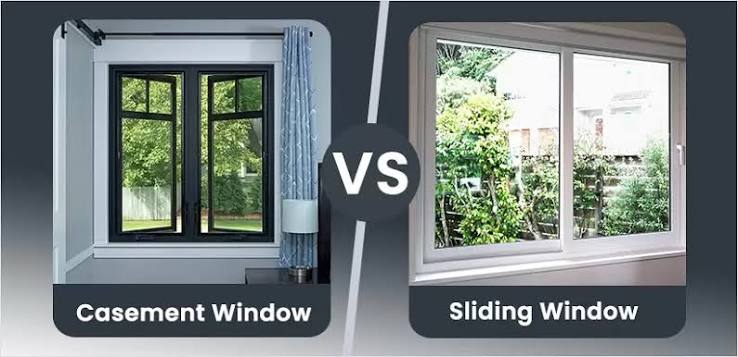
Ventilation: The Number That Decides Most Cases
This is the single biggest functional difference, and it comes down to how much of the opening actually swings clear.
- A casement window cranks its entire sash outward, opening close to 100% of the frame to airflow.
- A sliding window only ever opens about 50% of its width at once, since one pane always stays fixed behind the other.
- A three-track slider can push that closer to 60%, which narrows the gap somewhat if a basic two-track slider feels too restrictive.
- One India-specific source puts it plainly: size the window up, or pair it with cross-ventilation, if breeze through a sliding window matters to you.
Security and Sealing
Locking mechanism and how tightly the sash sits against the frame both affect this.
- Casement windows lock into the frame with hook-shaped or multi-point locks, generally rated as more secure out of the box.
- Sliding windows typically rely on latch locks, which several sources note can be reinforced with security bars or upgraded locking systems if needed.
- The tighter casement seal also means less air leakage, which is why nearly every source also credits casement with better energy efficiency.
- In coastal or very windy locations, casement’s tighter seal and corrosion-resistant hardware options are flagged as a real advantage over sliders.
Maintenance: Fewer Parts Doesn’t Always Mean Less Work
Each style has its own upkeep pattern rather than one being simply “lower maintenance.”
- Sliding windows have fewer moving parts overall, since there’s no hinge or crank mechanism to service.
- Their tracks, however, collect dust, dirt and debris and need regular cleaning to keep the sash moving smoothly.
- Casement windows need occasional attention to hinges and crank operators, and replacing that hardware costs more than replacing a track.
- Several sources note casement windows are actually easier to clean from the inside, which matters more in high-rise buildings where exterior access is limited.
Cost: Consistently in Sliding’s Favour
Every source I checked agrees on the direction here, even without a reliable India-specific rupee figure.
- Sliding windows are consistently described as the cheaper option, mainly because they have simpler hardware, no crank mechanism, and no hinges.
- Casement windows cost more upfront due to their operable hardware, weather seals and locking systems.
- Casement is credited with lower running costs over time through better heating and cooling efficiency, so the total cost gap can narrow depending on your climate and how long you keep the windows.
- International price ranges vary too widely by market to translate directly into rupees, so get a local quote rather than relying on a foreign cost figure.
Why India’s Apartments Lean Toward Sliding
This is less about performance and more about where you’re actually installing the window.
- Sliding windows need no outward swing clearance, which makes them the practical choice for balconies, tight rooms and high floors where an outward-swinging sash could be a hazard.
- Casement windows need genuine swing clearance outside the frame, with sash width typically capped around 3 feet, which rules them out for many compact apartment layouts.
- One India-focused source calls sliding “India’s most common type,” citing ease of sourcing and servicing as much as the design itself.
- Bi-fold or folding windows sit above both for opening an entire wall to a terrace, but at a cost premium neither sliding nor casement carries.
Matching the Window to the Room, Not the Trend
The honest takeaway across every source is the same: sliding wins on space, casement wins on airflow, and neither is simply “better” in the abstract. A balcony on the fifteenth floor has no business with an outward-swinging casement sash. A study that needs a genuine cross-breeze and a tight acoustic seal loses real function with a half-open slider. The mistake worth avoiding is picking a style because it’s what the last site used, rather than checking swing clearance, floor height and how much airflow the room actually needs.
Which One Fits Your Home
The right pick usually falls out once you check these against your actual rooms.
- Choose sliding for balconies, tight rooms, high floors, or anywhere outward swing clearance isn’t available.
- Choose casement where airflow, acoustic sealing or energy efficiency matter most, and you have the external clearance to spare.
- Mix both room by room, since nothing requires one style across an entire home.
FAQs
Q1. Which window style gives better ventilation, sliding or casement?
Casement, by a wide margin. It opens close to 100% of its frame to airflow, while a standard sliding window only opens about 50%, since one pane always stays fixed in place.
Q2. Are sliding windows always cheaper than casement windows?
Generally yes, across every source checked, mainly because sliding windows have simpler hardware with no hinges or crank mechanism. Casement can offset some of that gap over time through better energy efficiency, depending on your climate.
Q3. Why do apartments in India mostly use sliding windows?
Mainly because of space. Sliding windows need no outward swing clearance, making them practical for balconies and high floors, while casement windows need room outside the frame to open fully.
Q4. Do sliding windows need more maintenance than casement windows?
It’s different work, not necessarily more. Sliding windows need regular track cleaning to stop dust and debris from affecting the glide. Casement windows need occasional hinge and crank maintenance, which tends to cost more when it’s due.