
Condom use in India has grown substantially over the decades, but the market has changed just as much as the numbers — this list of the top 10 condom manufacturers in India 2026 reflects an industry that’s moved well beyond a single government-distributed brand into one worth roughly USD 293 million and growing at over 8% annually. What used to be a category people avoided discussing openly is now marketed with the same design sensibility and product variety as any other personal care segment.
Understanding which companies are actually behind the brands on pharmacy shelves helps buyers make informed choices, whether that’s about material, fit, or simply trusting where a product comes from. Here’s a factual look at who’s manufacturing India’s condoms and what sets each company apart.
Top 10 Condom Manufacturers in India 2026
| Company/Brand | Parent Company | Known For | Market Position |
| Nirodh | HLL Lifecare (Govt. PSU) | Largest-selling condom in India | Market leader by volume, ~17% share |
| KamaSutra | J.K. Ansell (Raymond Group) | India’s second-largest condom brand | Wide market presence, 70+ countries |
| Skore | TTK Group | Youth-focused, bold marketing | Fast-growing modern brand |
| Kohinoor | TTK Group | Affordability, regional reach | Value-focused segment |
| Manforce | Mankind Pharma | Wide pharma-backed distribution | Strong domestic reach |
| Durex | Reckitt Benckiser | Global brand, premium positioning | International market leader |
| Cupid Limited | Cupid Limited | Male and female condoms, WHO/UNFPA pre-qualified | Manufacturing specialist, exports |
| Skyn | Lifestyles Healthcare | Non-latex condoms for latex allergies | Premium, allergy-safe segment |
| Bleü | Sirona (Good Glamm Group) | India’s first vegan-certified condom | Niche, sustainability-focused |
| Moods | Established Indian brand | Long-standing market recognition | Wide retail availability |
1. Nirodh
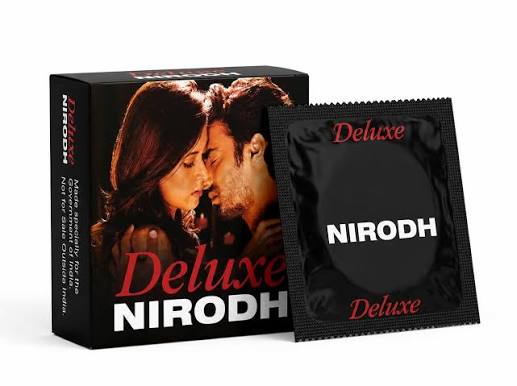
Nirodh holds a genuinely unique place in India’s condom industry — manufactured by HLL Lifecare, a Government of India public sector undertaking, it remains the largest-selling condom brand in the country by volume.
- Manufactured by HLL Lifecare, based in Thiruvananthapuram, Kerala
- Holds roughly 17% market share, the largest of any single brand in India
- Available at historically low pricing, reflecting its public health origins dating back decades
- Continues playing a central role in India’s broader sexual health and family planning programs
2. KamaSutra
KamaSutra stands as India’s second-largest condom brand, manufactured by J.K. Ansell Limited, now wholly owned by the Raymond Group.
- Introduced in 1991, now available across more than 70 countries
- Manufacturing facility located in Aurangabad, Maharashtra, with capacity for roughly 350 million pieces annually
- Originally a joint venture between Raymond Group and Ansell, an Australian latex products company
- Built brand recognition around a focus on pleasure and sensuality rather than purely clinical positioning
3. Skore
Skore, a TTK Group brand, has specifically targeted younger Indian consumers through modern packaging and a distinctly less clinical marketing approach.
- Emphasizes making safe sex feel contemporary rather than taboo, particularly among younger buyers
- Product range includes the Skore Not Out series, designed as a climax-delay option
- Also offers Dotted variants for added texture and ThinFeel options for a closer-to-skin sensation
- Combines digital engagement and bold campaigns with rapid product innovation
4. Kohinoor
Kohinoor, another brand under the TTK Group umbrella, takes a deliberately different approach from Skore, focusing on affordability and reach into smaller towns and regional markets.
- Positioned specifically toward value-conscious buyers rather than premium or trend-focused segments
- Complements Skore’s urban appeal by extending TTK’s reach into price-sensitive regional markets
- Reflects TTK’s broader strategy of covering multiple price and demographic segments under one company
- Contributes to expanding overall condom accessibility across India’s diverse economic landscape
5. Manforce
Manforce is manufactured by Mankind Pharma, one of India’s major pharmaceutical companies, giving it distribution advantages tied to an extensive existing healthcare supply chain.
- Backed by Mankind Pharma, established in 1991 and headquartered in New Delhi
- Benefits from Mankind’s broader consumer healthcare distribution network across pharmacies nationwide
- Part of a wider portfolio that includes other sexual and reproductive health products
- Strong domestic visibility due to Mankind’s extensive existing retail and pharmacy relationships
6. Durex
Durex brings genuine global scale into the Indian market as part of Reckitt Benckiser’s international sexual wellness portfolio.
- Positioned firmly in the premium segment, competing on both quality perception and product innovation
- Reformulated its lubricants in recent years to enhance comfort, particularly for women
- Launched more affordable pack variants to improve accessibility in rural and price-sensitive markets
- Benefits from Reckitt Benckiser’s extensive global research and development resources
7. Cupid Limited
Cupid Limited occupies a genuinely distinct position in this list — it’s a dedicated manufacturer specializing in both male and female condoms, holding a globally recognized quality distinction.
- Founded in 1993, headquartered in Nashik, Maharashtra
- First company in the world to receive WHO/UNFPA pre-qualification status for supplying both male and female condoms
- Manufacturing capacity exceeds 480 million male condoms and 52 million female condoms annually
- Also produces water-based lubricant jelly and diagnostic kits, extending beyond condoms into broader sexual health products
8. Skyn
Skyn, manufactured by Lifestyles Healthcare, has built its identity around a genuinely important niche — non-latex condoms for buyers with latex allergies.
- Made from polyisoprene rather than traditional latex, making it safe for buyers with latex sensitivity
- Positioned as a fast-growing, innovation-focused brand within the broader non-latex segment
- Lifestyles Healthcare operates manufacturing facilities across India, China, and Thailand
- Appeals specifically to buyers prioritizing comfort and allergy safety over standard latex options
9. Bleü
Bleü holds the distinction of being India’s first vegan-certified condom brand, now operating under Sirona Hygiene as part of the Good Glamm Group.
- Acquired by Sirona Hygiene in 2024, extending the brand’s reach through Sirona’s broader wellness platform
- Positioned specifically around sustainability and vegan-certified manufacturing processes
- Appeals to environmentally and ethically conscious consumers seeking alternatives to standard manufacturing
- Represents the growing intersection between sexual wellness and broader sustainability trends in Indian consumer products
10. Moods
Moods has built long-standing recognition as one of India’s well-established condom brands, maintaining wide retail availability across the country.
- Long-standing presence in India’s condom market with broad pharmacy and retail distribution
- Recognized name that consumers across different regions readily identify
- Part of the broader landscape of established Indian brands competing across multiple price segments
- Continues serving as a familiar, trusted option for many regular buyers
What to Check Before Buying Condoms in India
A few practical factors matter more than brand recognition alone for both safety and comfort:
- Check the expiry date before every purchase — condoms degrade over time, and using an expired product significantly increases failure risk
- Verify the correct size and fit — an ill-fitting condom, whether too tight or too loose, reduces both comfort and reliability
- Choose non-latex options if you have a latex allergy — brands like Skyn use polyisoprene specifically to address this need safely
- Store condoms away from heat and direct sunlight — a wallet or car glove compartment isn’t ideal for long-term storage, since heat degrades the material faster
- Look for BIS certification and proper sealing — genuine, properly packaged products protect against both quality issues and counterfeit risk
FAQs
Q1. How can I tell if a condom has expired or is no longer safe to use?
Check the printed expiry date on the individual wrapper and the outer packaging before use, and discard anything past that date regardless of appearance. A condom that feels sticky, brittle, or discolored should also be discarded even if technically within its expiry window, since improper storage can degrade it faster than expected.
Q2. What’s the difference between latex and non-latex condoms, and who should choose non-latex?
Latex condoms are the most common and generally more affordable, offering reliable protection for most users. Non-latex options like Skyn, made from polyisoprene, are specifically designed for people with latex allergies, offering similar protection without the allergic reaction risk.
Q3. Is it safe to use oil-based lubricants with condoms?
No, oil-based lubricants can weaken latex condoms and increase the risk of breakage, so water-based or silicone-based lubricants are the safer choice. Always check the product packaging, since some non-latex condoms have different compatibility requirements than standard latex ones.
Q4. Why do condom sizes and fits vary so much between brands, and how do I choose correctly?
Manufacturers use slightly different measurements and shapes, so a size that fits well from one brand may not translate exactly to another. Checking width measurements on the packaging, rather than assuming a standard size fits universally, helps avoid discomfort or reduced reliability.