
One single Chinese surname belongs to more people than the entire population of Germany, France, and the UK combined — a genuinely staggering fact that puts global surname distribution into perspective. According to Forebears’ surname-distribution data, roughly 1 in every 68 people on Earth shares this one family name, and the gap between it and every other surname on the planet is bigger than most people expect.
| Rank | Surname | Approx. Global Bearers | Origin/Meaning |
| 1 | Wang | 92+ million | Chinese, means “king” |
| 2 | Li | ~92 million | Chinese, one of oldest surnames |
| 3 | Zhang | ~85 million | Chinese, ancient occupational origin |
| 4 | Nguyen | ~40 million | Vietnamese, tied to former ruling dynasty |
| 5 | Chen | ~70+ million | Chinese, common across East/Southeast Asia |
| 6 | Kim | ~20% of South Korea | Korean, means “gold” |
| 7 | Ali | Widespread across Africa/Middle East | Arabic, means “high/lofty” |
| 8 | Garcia | Most common in Spanish-speaking world | Spanish/Basque origin |
| 9 | Smith | ~2.5 million in US alone | English, occupational (blacksmith) |
| 10 | Muller | Most common in Germany/Switzerland | German, occupational (miller) |
1. Wang — The World’s Most Common Surname
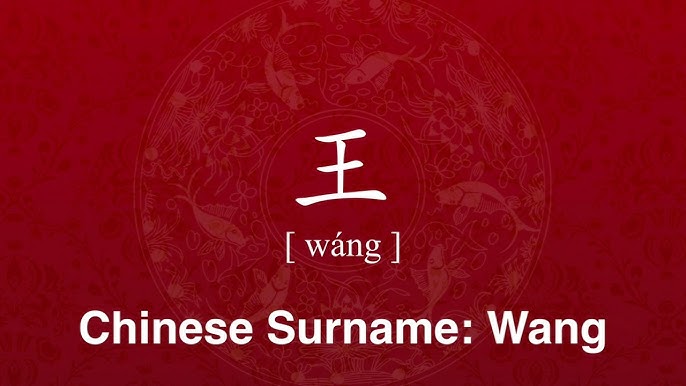
Wang stands as genuinely the most common surname on the entire planet, shared by more people than any other family name.
- Carried by more than 92 million people in China alone, making it the single most populous surname worldwide.
- The name means “king” in Mandarin, and its widespread adoption traces back to roughly 250 BCE, when many royal families changed their name to Wang after the Zhou dynasty fell to the first Qin dynasty emperor.
- Adopting this name served a genuinely practical purpose historically — it helped former royal families preserve status and protect themselves as political power shifted dramatically.
2. Li — A Name With Genuinely Ancient Roots
- Ranks as one of the oldest and most widely carried surnames in Chinese history, with a population count nearly matching Wang’s dominant global position.
- Reflects China’s practice of surname classification, which began as early as 2852 BCE for organizational purposes — among the earliest recorded surname systems anywhere in the world.
3. Zhang — Another Chinese Giant
- Shared by tens of millions across China, Zhang rounds out the trio of surnames that together illustrate just how completely Chinese family names dominate the global count.
- Like Wang and Li, its scale reflects China’s sheer population size combined with a comparatively smaller pool of surnames relative to that population, unlike more surname-diverse regions.
4. Nguyen — Vietnam’s Overwhelmingly Dominant Name
- Carried by an estimated 40 million people, Nguyen is tied directly to Vietnam’s former ruling Nguyen dynasty.
- Its concentration within a single country is genuinely remarkable — a substantial share of Vietnam’s entire population carries this one surname, reflecting how political and dynastic history shaped naming patterns there.
5. Chen — Widespread Across East and Southeast Asia
- One of the most common surnames not just in China, but across broader Chinese diaspora communities throughout Southeast Asia, including Taiwan, Singapore, and Malaysia.
- Reflects centuries of migration patterns that carried Chinese surnames well beyond mainland borders into genuinely global distribution.
6. Kim — Korea’s Defining Surname
- Roughly 20% of South Korea’s entire population shares the surname Kim, an extraordinary concentration for a single name within one country.
- The word means “gold,” and its popularity traces back to centuries when surnames were reserved exclusively for royalty and aristocracy — when the practice expanded to the broader population, many families adopted noble names like Kim, Lee, or Park.
- Kim is also the most prevalent surname in North Korea and parts of Central Asia, extending its dominance beyond South Korea alone.
7. Ali — The Leading Surname Across Africa and the Middle East
- Widely carried across Somalia, Eritrea, Bahrain, the United Arab Emirates, and numerous other African and Middle Eastern nations.
- Traces directly to Ali ibn Abi Talib, a central figure in Islamic history, with the name itself meaning “high” or “lofty” — its widespread use reflects both genuine religious and cultural influence spanning centuries.
8. Garcia — The Spanish-Speaking World’s Top Name
- Among the most widely-held surnames throughout the entire Spanish-speaking world, spanning Spain and Latin America.
- Also the most common surname specifically in Mexico and El Salvador, reflecting how colonial and linguistic history spread this single family name across an entire hemisphere.
9. Smith — English-Speaking Countries’ Default Surname
- The most popular surname across English-speaking nations, with approximately 5 million people carrying it in the United States alone.
- Originated as an occupational surname, designating someone who worked as a blacksmith or silversmith — reflecting Europe’s broader tradition of occupation-based family naming.
- Also the most common surname in both Canada and the United Kingdom, illustrating remarkably limited surname diversity across the English-speaking Western world compared to other global regions.
10. Muller — Germany and Switzerland’s Leading Name
- The most common surname in both Germany and Switzerland, similarly rooted in occupational tradition — specifically referring to someone who worked as a miller.
- Reflects the broader European pattern where occupational surnames became genuinely dominant family names over centuries of use.
Why India Doesn’t Have a Single Dominant Surname on This List
- India presents a genuinely fascinating counterpoint — names like Singh (meaning “lion”) and Devi (meaning “goddess”) are shared by tens of millions of people, particularly in North India, and would rank very high by raw count if measured in isolation.
- India’s naming practice is so varied by region, religion, caste, and community that no single Indian surname concentrates the way Wang or Nguyen does within their respective countries.
- This reflects India’s genuinely extraordinary linguistic and cultural diversity, spread across dozens of distinct naming traditions rather than converging around any single dominant name nationally.
What Surname Origins Generally Reveal
- Surnames worldwide typically fall into five categories: patronymics (referring to fathers or ancestors), personal characteristics, occupations, toponymics (home region), and clan or tribal affiliations.
- Occupational surnames are more of a European or Western tradition, while patronymics dominate much of Asia and Latin America, and names tied to personal characteristics remain common across much of Africa.
- Historical exceptions exist too — enslaved people in the United States often had to adopt the surnames of their subjugators, which is why many Black American families carry distinctly European surnames today.
The Bottom Line
Wang’s position as the world’s single most common surname, carried by over 92 million people, reflects China’s sheer population scale combined with a genuinely concentrated surname pool, a pattern echoed by Li, Zhang, and Chen, while Nguyen and Kim show similarly extraordinary concentration within Vietnam and Korea specifically. Against this backdrop, English and Spanish surnames like Smith and Garcia, despite being individually well-known worldwide, fall well short of the Chinese giants in raw headcount — and India’s own naming diversity, spanning countless regional and religious traditions, means the country contributes genuinely massive surname populations like Singh and Devi without any single name achieving the same global dominance.
FAQs
Q1. Why does Wang have so many more bearers than Smith, despite both being widely recognized names?
China’s population size combined with a comparatively small surname pool concentrates millions of people under a handful of names, unlike the more surname-diverse English-speaking world.
Q2. Why doesn’t any single Indian surname rank among the world’s most common despite India’s massive population?
India’s naming practices vary enormously by region, religion, caste, and community, spreading its population across countless distinct surnames rather than concentrating around one.
Q3. Are occupational surnames like Smith and Muller found in non-European cultures too?
Occupational naming is more distinctly a European or Western tradition; other regions more commonly use patronymic or personal-characteristic-based naming systems instead.
Q4. How did surnames like Kim become so concentrated within a single country like Korea?
Surnames were historically reserved for Korean royalty and aristocracy; when the practice expanded to commoners, many adopted prestigious existing names like Kim rather than creating new ones.