
You don’t need a week-long Himalayan expedition to chase a proper waterfall in India, some of the country’s most dramatic cascades sit within a comfortable weekend drive of Mumbai, Pune, Bangalore, Chennai, Hyderabad, and Delhi. Whether it’s Randha Falls thundering down 170 feet in Ahmednagar or Kuntala Falls plunging 200 feet through Telangana’s forests, monsoon transforms these dry rocky beds into roaring, misty escapes right at the edge of India’s biggest cities. Here’s a guide to the top 10 waterfalls near major Indian cities worth planning a trip around.
| Rank | Waterfall | Nearest City/Cities | Approx. Distance |
| 1 | Randha Falls | Mumbai/Pune (Bhandardara) | 156 km from Pune, 177 km from Mumbai |
| 2 | Lingmala Falls | Pune/Mumbai (Mahabaleshwar) | 116 km from Pune, ~250 km from Mumbai |
| 3 | Devkund Falls | Mumbai (Bhira) | ~120 km from Mumbai (currently restricted) |
| 4 | Kune Falls | Pune/Mumbai (Lonavala) | ~65 km from Pune, ~100 km from Mumbai |
| 5 | Hogenakkal Falls | Bangalore/Chennai | 146 km from Bangalore, 345 km from Chennai |
| 6 | Shivanasamudra Falls | Bangalore | 130 km from Bangalore |
| 7 | Kuntala Falls | Hyderabad | 260-270 km from Hyderabad |
| 8 | Ethipothala Falls | Hyderabad | 160-163 km from Hyderabad |
| 9 | Mallela Theertham | Hyderabad | 173 km from Hyderabad |
| 10 | Kempty Falls | Delhi (via Mussoorie) | ~290 km from Delhi |
1. Randha Falls — Mumbai and Pune’s Monsoon Classic
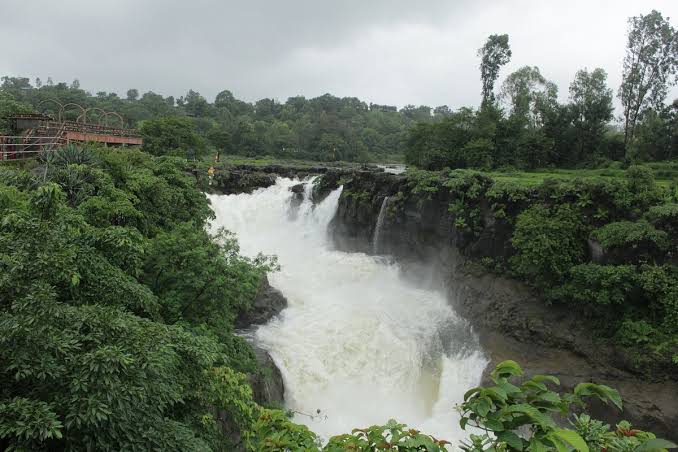
Located on the Rajur-Bhandardara road in Ahmednagar district, Randha Falls forms over the Pravara River and cascades down from a height of 170 feet into a striking gorge.
- Considered one of the prominent waterfalls in India, and a genuine must-visit during monsoon specifically.
- Serves as the chief source of hydro power for the Bhandardara region.
- A temple sits on the riverbank, and a viewpoint just above the falls offers excellent photography angles.
- The rocky gorge walls host bee colonies, with hanging hives visible under the ledges, worth admiring from a safe distance.
2. Lingmala Falls — Mahabaleshwar’s Underrated Escape
Situated at an altitude of 1,278 metres near Mahabaleshwar, Lingmala Falls is formed by the Venna River and remains one of the most prominent monsoon destinations for Pune travellers.
- Features two falls, a mini waterfall and the main cascade, both worth exploring.
- Sits within a protected forest zone managed by the Maharashtra Forest Department, with an applicable entry fee.
- Genuinely underrated compared to Mahabaleshwar’s more commercialised attractions, making it a quieter alternative.
- Best time to visit: June to September, with easy trek difficulty suitable for most fitness levels.
3. Devkund Falls — Mumbai’s Most Googled (and Restricted) Waterfall
Devkund, near Bhira village roughly 120 km from Mumbai, has long been one of the most searched waterfall destinations from the city.
- Important 2026 update: Devkund is officially restricted from 17 June to 30 September 2026 under a Raigad collectorate order, citing multiple drowning incidents over the past two years.
- The restriction applies specifically to the trailhead at Bhira and the falls themselves, so confirm current status before planning a visit.
- Travellers are being advised to substitute with Madhe Ghat, a similar-scale waterfall with fewer crowds and no current restriction.
4. Kune Falls — Lonavala’s Accessible Cascade
Kune Falls sits within the Lonavala-Khandala belt, widely regarded as the most accessible waterfall cluster from both Pune and Mumbai.
- A genuinely convenient option for travellers wanting a monsoon waterfall trip without a lengthy drive.
- Best combined with other Lonavala attractions given the area’s dense concentration of viewpoints and hill stations.
- Peak flow typically runs from mid-July through August, with water levels easing considerably by September.
5. Hogenakkal Falls — The Niagara of India
Often referred to as the “Niagara of India,” Hogenakkal is one of the major waterfalls accessible from both Bangalore and Chennai, formed as the River Kaveri descends the landscape after winding through Karnataka.
- The falls feature about 14 channels with drops varying between 15 and 65 feet.
- The surrounding carbonatite rocks are among the oldest rock formations in the world.
- Coracle (traditional round boat) riding is a major attraction, permitted during post-monsoon and winter season specifically, though usually suspended during peak monsoon.
- Nearby attractions include Mettur Dam and the Melagiri Hills, making it a genuinely full day trip destination.
6. Shivanasamudra Falls — Bangalore’s Reliable Weekend Trip
Located roughly 130 km from Bangalore, Shivanasamudra ranks among the best waterfalls in Karnataka and a genuinely popular one-day trip destination from the city.
- Formed by the Kaveri River splitting into two channels, Barachukki and Gaganachukki, creating twin cascades within the same complex.
- A consistently recommended pick for Bangalore residents wanting a straightforward monsoon getaway without extensive travel time.
7. Kuntala Falls — Telangana’s Tallest Waterfall
Located in Adilabad district roughly 260-270 km from Hyderabad, Kuntala is the tallest waterfall in Telangana, plunging approximately 200 feet through dense forest.
- Formed by the Kadam River, cascading down through two distinct rocky steps.
- Requires a trek of roughly 400 steps down from the entry point to reach the base of the falls.
- Best time to visit: monsoon (July-September) for maximum flow, though post-monsoon (October-November) offers safer conditions with clearer skies.
8. Ethipothala Falls — Hyderabad’s Scenic Classic
Ethipothala Falls, formed on the River Chandra Vanka roughly 160-163 km from Hyderabad, sits within a beautifully green, forested locality and remains one of the most striking waterfalls accessible from the city.
- Visitors can climb down for a closer view of the cascading water.
- Nearby attractions include the Ranganatha and Dattatreya temples, worth combining into the same day trip.
- Best time to visit: October to March, during Telangana’s cooler, drier winter months.
9. Mallela Theertham — A Forest Waterfall Near Srisailam
Located roughly 173 km from Hyderabad and just 58 km from Srisailam, Mallela Theertham drops about 150 feet through dense Nallamala forest onto Shiva Linga-like rock formations.
- Requires descending approximately 380 well-laid steps from the road point to reach the falls.
- A popular stop specifically for travellers already heading toward Srisailam along the highway.
- The pool below the falls is fenced for safety, though a path allows access to the base when stream flow is manageable.
10. Kempty Falls — Delhi’s Classic Hill Escape
Kempty Falls, located near Mussoorie roughly 290 km from Delhi, remains one of the most popular waterfall destinations for Delhi travellers heading toward the Himalayan foothills.
- Combines well with a broader Mussoorie or Dehradun weekend trip, since it’s easily accessible from the main hill station route.
- A genuinely popular family destination given its accessibility and the surrounding cool mountain climate.
Frequently Asked Questions
Q1. Is it safe to visit Devkund Falls near Mumbai in 2026?
A: No, Devkund is officially restricted from 17 June to 30 September 2026 under a Raigad collectorate order due to multiple drowning incidents in recent years, so travellers should visit alternatives like Madhe Ghat instead and always confirm current access status before heading out.
Q2. What’s the best time of year to visit most waterfalls near major Indian cities?
A: Peak flow for most Western Ghats waterfalls near Mumbai, Pune, and Bangalore runs from mid-July through August, while Hyderabad’s waterfalls are often recommended for post-monsoon visits (October-November) specifically for safer water currents and clearer weather.
Q3. Which waterfalls are best suited for families with children rather than serious trekkers?
A: Ethipothala Falls near Hyderabad and Kune Falls near Lonavala are both genuinely accessible with minimal trekking required, while destinations like Kuntala Falls, requiring a 400-step descent, and Naneghat’s trekking corridor are better suited to more adventurous travellers.
Q4. How far in advance should I plan a monsoon waterfall trip from a major city?
A: Given how quickly accommodation books out during peak monsoon weekends, particularly around Lonavala, Mahabaleshwar, and Bhandardara, it’s worth booking stays and confirming any access restrictions at least a couple of weeks ahead, especially since road conditions and waterfall access can change rapidly with rainfall intensity.