
India’s defence budget crossed ₹6.81 trillion for FY 2025-26, a 9.5% jump from the previous year, and a growing share of that money is now staying within the country instead of flowing to foreign suppliers. This list of the top 10 defence equipment manufacturers in India 2026 reflects that shift — decades-old public sector giants working alongside private conglomerates that have entered the sector only in the last few years, all competing to build everything from fighter jets to submarines domestically.
What makes this moment genuinely interesting is the pace of change. Government-owned defence PSUs still dominate platform-level programs, but private companies now hold real program responsibility, including full aircraft assembly in some cases. Here’s who’s actually building India’s defence capability right now.
| Company | Type | Core Focus | Notable Detail |
| Hindustan Aeronautics (HAL) | DPSU | Aircraft, helicopters | India’s 14th Maharatna company |
| Bharat Electronics (BEL) | DPSU | Radar, electronic warfare | ₹75,000 crore order book |
| Bharat Dynamics (BDL) | DPSU | Missile systems | Central to India’s missile programs |
| Mazagon Dock Shipbuilders | DPSU | Submarines, warships | Naval shipbuilding backbone |
| Garden Reach Shipbuilders (GRSE) | DPSU | Naval vessels | Kolkata-based shipbuilding |
| Cochin Shipyard | DPSU | Ships, aircraft carriers | Deep naval manufacturing capability |
| BEML Limited | DPSU | Land systems, vehicles | Defence and infrastructure equipment |
| Tata Advanced Systems (TASL) | Private | Aerostructures, UAVs | JV with Boeing, global OEM partnerships |
| Bharat Forge | Private | Armoured platforms | Collaboration with DRDO on new platforms |
| Adani Defence | Private | UAVs, ammunition | Fast-growing entrant in small arms and drones |
1. Hindustan Aeronautics Limited (HAL)
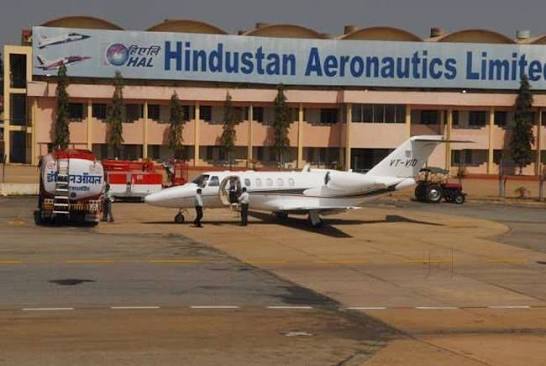
HAL sits at the top of India’s aerospace manufacturing hierarchy, and its position has only strengthened recently.
- Became India’s 14th Maharatna company and, as of May 2026, ranked as the top Maharatna company by market capitalisation
- Central to indigenous programs including the Tejas fighter aircraft and advanced rotary platforms
- Secured contracts for 156 Light Combat Helicopters and 240 AL-31FP engines
- Repair and overhaul services account for roughly 70% of revenue, even as its manufacturing segment grows rapidly
- Has delivered more than 150 military Do-228 aircraft to various customers, alongside civilian variants
2. Bharat Electronics Limited (BEL)
BEL is India’s foremost defence electronics manufacturer, and its financial performance in 2026 reflects genuinely strong demand across the armed forces.
- Navratna PSU founded in 1954, headquartered in Bengaluru
- Record order book of ₹75,000 crore as of 2026, with revenue growing 20-25% annually
- Supplies radar systems, electronic warfare equipment, sensor suites, and communication systems
- Key electronics partner to both the Air Force and Navy
- Strategic importance reinforced by continued government investment in indigenous surveillance and communication technology
3. Bharat Dynamics Limited (BDL)
BDL occupies a specialized, high-stakes niche within India’s defence manufacturing landscape — guided missile systems.
- Specializes in missile systems and strategic defence equipment
- Contributes significantly to India’s missile development programs
- Remains central to guided weapons manufacturing even as private players expand into other segments
- Works closely with DRDO on next-generation missile technology
- One of the DPSUs most closely tied to India’s strategic deterrence capability
4. Mazagon Dock Shipbuilders Limited (MDL)
Mazagon Dock provides the deep naval manufacturing capability India needs for its submarine and warship programs, a category where indigenous capacity has historically lagged behind aerospace.
- One of India’s most critical naval shipbuilding facilities
- Builds submarines and major warships for the Indian Navy
- Ranked among the top 100 global arms firms alongside HAL and BEL
- Continues expanding capacity as India pushes toward greater naval self-sufficiency
- Plays a central role in reducing dependence on foreign submarine and warship suppliers
5. Garden Reach Shipbuilders & Engineers (GRSE)
Based in Kolkata, GRSE complements Mazagon Dock’s naval shipbuilding work, giving India two major domestic yards capable of producing complex naval vessels.
- Long-established shipbuilding capability focused on naval vessels for the Indian Navy
- Contributes to India’s broader push for indigenous warship construction
- Works alongside other DPSUs to reduce reliance on imported naval platforms
- Part of the government’s strategy to build redundant, geographically distributed shipbuilding capacity
6. Cochin Shipyard
Cochin Shipyard rounds out India’s trio of major naval shipbuilders, with a track record that includes some of the country’s most technically demanding projects.
- Deep naval manufacturing capability spanning ships and aircraft carriers
- Played a central role in constructing India’s indigenous aircraft carrier program
- Continues to expand capacity for both defence and commercial shipbuilding
- Represents one of the clearest examples of India’s growing indigenous naval engineering capability
7. BEML Limited
BEML brings a different kind of defence manufacturing to the table — land systems and specialized vehicles rather than aircraft or ships.
- Manufactures defence vehicles and land systems alongside its broader industrial equipment business
- Government-owned, with defence manufacturing as a core strategic focus alongside its rail and mining equipment operations
- Supplies specialized vehicles used across various branches of the armed forces
- Long operating history gives it deep engineering credibility in heavy vehicle manufacturing
8. Tata Advanced Systems Limited (TASL)
TASL stands out as the most comprehensive private-sector defence manufacturer in India, backed by the Tata Group’s global aerospace relationships and engineering depth.
- Manufactures aerospace aerostructures, tactical communication systems, and helicopters through the TATA Boeing Aerospace joint venture
- Global OEM partnerships with companies including Airbus and Boeing
- Expanding into drones, electronic warfare, and missile system components
- Serves both Indian armed forces and international defence customers
- Benefits from Tata Group’s financial capacity to invest in complex, long-cycle defence programs
9. Bharat Forge
Bharat Forge, part of the Kalyani Group, has moved from its traditional forging business into serious armoured vehicle and platform manufacturing.
- Collaborated with DRDO to unveil indigenous advanced armoured platforms in April 2026
- New platforms feature 65% indigenous content, directly supporting the Aatmanirbhar Bharat initiative
- Leverages decades of heavy engineering and metallurgy expertise into defence-grade manufacturing
- Represents a genuine example of India’s private industrial base pivoting into strategic defence production
10. Adani Defence
Adani Defence is among the fastest-growing private entrants into India’s defence sector, expanding aggressively across multiple product categories.
- Focus areas include UAVs, small arms, ammunition manufacturing, and radar systems
- Significant investments in defence manufacturing infrastructure
- Benefits from the broader Adani Group’s logistics, ports, and industrial capabilities
- Represents the kind of rapid private-sector entry the government has actively encouraged through policy reform
Understanding India’s Defence Manufacturing Shift
A few practical points help make sense of how this sector actually works today:
- DPSUs still hold most platform-level programs — HAL, BEL, BDL, and the naval shipyards continue to manage the largest, most complex defence contracts by value
- Private companies now hold genuine program responsibility — Tata Advanced Systems, Bharat Forge, and Adani Defence have moved well beyond component supply into full platform and system manufacturing
- “Made in India” doesn’t always mean fully indigenous — a platform may be assembled and engineered domestically while still using imported engines, sensors, or specialized electronics; indigenous content varies significantly by program
- FDI rules have opened the sector considerably — up to 74% foreign direct investment is now permitted in defence manufacturing, with two dedicated Defence Industrial Corridors established in Uttar Pradesh and Tamil Nadu
- Order books don’t translate directly into revenue — defence contracts run over several years through design, manufacturing, trials, and acceptance milestones, so a large order book doesn’t mean immediate income
FAQs
Q1. Why do defence companies like HAL and L&T have such different financial reporting compared to each other?
HAL and BEL are dedicated listed defence PSUs with detailed standalone financials specific to their defence operations. L&T is a diversified engineering conglomerate, and Tata Advanced Systems is an unlisted private company, so their defence segment performance often isn’t disclosed with the same granularity.
Q2. Does India still depend heavily on foreign defence imports despite this manufacturing growth?
Yes, significantly, though the balance is shifting. Many domestically assembled platforms still rely on imported engines, sensors, or specialized electronics, and indigenous content percentages vary widely across individual programs rather than following a single fixed standard.
Q3. Can private companies really compete with established DPSUs like HAL or BEL for major contracts?
Increasingly yes — companies like Tata Advanced Systems and Bharat Forge now hold major program responsibility, including full platform assembly in some cases. However, DPSUs still manage the majority of large-scale, strategically sensitive programs like missiles and submarines.
Q4. What does the 65% indigenous content figure on new armoured platforms actually mean for buyers or the military?
It means roughly two-thirds of the platform’s components and technology are sourced or manufactured within India, reducing dependence on foreign supply chains for that specific system. The remaining content, often specialized electronics or precision components, may still come from international suppliers depending on the platform’s requirements.