India’s wedding industry is now valued at approximately ₹10 lakh crore, making it one of the largest celebration economies on earth — and yet what genuinely defines an Indian wedding isn’t the spending, it’s the sequence of deeply symbolic rituals that unfold over several days, each carrying meaning passed down through generations. Whether you’re planning your own wedding, attending one as a guest for the first time, or simply curious about the traditions behind the celebration, understanding these core rituals reveals why Indian weddings feel less like a single event and more like a carefully choreographed spiritual journey.
| Rank | Tradition | When It Happens | Core Significance |
| 1 | Roka/Engagement | Weeks-months before wedding | Formal family commitment |
| 2 | Mehndi | 1-2 days before wedding | Henna application, good luck, love |
| 3 | Sangeet | 1-2 days before wedding | Music, dance, family bonding |
| 4 | Haldi | Day before/morning of wedding | Turmeric paste, purification blessing |
| 5 | Baraat | Wedding day | Groom’s ceremonial procession |
| 6 | Jaimala/Varmala | Wedding day | Exchange of floral garlands |
| 7 | Mandap Rituals | Wedding day | Sacred canopy ceremonies begin |
| 8 | Saptapadi (Seven Pheras) | Wedding day | Seven vows around sacred fire, legally binding |
| 9 | Sindoor & Mangalsutra | Wedding day | Marks married status |
| 10 | Vidaai & Reception | Wedding day/after | Bride’s farewell, celebratory reception |
1. Roka/Engagement — Formalizing the Commitment
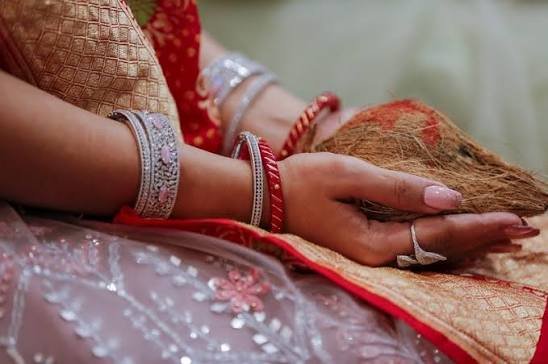
The wedding journey genuinely begins well before the actual ceremony, with families formally acknowledging the upcoming union.
- According to a 2025 WeddingWire India survey, 78% of Indian couples now hold a formal engagement event, with average spending ranging between ₹1,00,000 and ₹5,00,000.
- Many families combine the engagement with the roka ceremony, or host it as a standalone celebration, sometimes structured as a cocktail party in more modern setups.
- This event serves as the formal announcement to extended family and community that the wedding is officially proceeding.
2. Mehndi — The Henna Ceremony
Held typically one to two days before the wedding, mehndi has become genuinely one of the most photographed and anticipated pre-wedding events.
- A professional henna artist applies intricate designs to the bride’s hands and feet, often hiding the groom’s name subtly within the patterns as a playful tradition.
- Rooted in both Hindu and Muslim traditions across South Asia, the ritual is believed to bring good luck and deepen love between the couple.
- A bridal mehendi session with a top artist in metro cities can cost anywhere from ₹15,000 to ₹1,50,000 depending on design complexity and the artist’s reputation.
- In Rajasthani and Marwari traditions specifically, the mehendi function becomes an elaborate affair featuring professional folk musicians and dance performances.
3. Sangeet — The Night of Music and Dance
- A genuinely joyous, high-energy celebration where both families come together through music, choreographed dance performances, and informal bonding before the more solemn wedding day itself.
- Has evolved considerably in recent years into one of the most elaborate pre-wedding events, often featuring professionally choreographed routines by family members and friends.
4. Haldi — The Turmeric Blessing Ceremony
- Turmeric paste, often mixed with sandalwood, rosewater, or milk, is applied to the bride and groom’s skin (sometimes in separate ceremonies at each family’s home) by close family members.
- Genuinely believed to purify, bless, and beautify the couple before their wedding, while also symbolically warding off evil.
- Marked by bright yellow attire, playful smearing of the paste, and a generally lighthearted, celebratory family atmosphere.
5. Baraat — The Groom’s Grand Procession
- The groom traditionally arrives at the wedding venue in a ceremonial procession, historically on a horse, now sometimes in decorated vehicles, accompanied by dancing family members and a live band.
- This energetic arrival marks the genuine beginning of the wedding day’s formal proceedings, with the groom’s side announcing their arrival with considerable fanfare.
6. Jaimala or Varmala — The Garland Exchange
- The bride and groom exchange floral garlands, symbolizing mutual acceptance of one another as life partners in front of gathered family and friends.
- This moment often carries a lighthearted, competitive energy, with friends sometimes playfully lifting the couple to make garlanding each other more challenging.
7. Mandap Rituals — Entering the Sacred Canopy
- The mandap serves as the sacred canopy under which the core Hindu wedding rituals actually take place, typically adorned elaborately with flowers and traditional decor.
- Multiple smaller rituals occur within this space before the marriage’s central, legally significant moment, each carrying its own specific spiritual meaning rooted in ancient Vedic texts.
8. Saptapadi — The Seven Sacred Steps
This is genuinely the spiritual and legal climax of a Hindu wedding.
- The couple takes seven steps together around the sacred fire, with each step representing a specific vow — nourishment, strength, prosperity, happiness, progeny, health, and eternal friendship and loyalty.
- According to the Hindu Marriage Act, the marriage becomes legally binding only after the seventh step is completed, making this the genuine legal and spiritual centerpiece of the entire celebration.
- A related ritual involves the bride’s brother placing puffed rice (Laja) into her cupped hands, which the couple then offers together into the fire as a prayer for the groom’s long life and the bride’s protection from widowhood.
9. Sindoor and Mangalsutra — Marking Married Status
- The groom applies sindoor (vermillion powder) to the bride’s hair parting, and ties the mangalsutra (a sacred necklace) around her neck — both acts formally marking her new status as a married woman.
- These symbols are worn by married Hindu women in daily life afterward, serving as visible, lasting markers of the marital bond established during the ceremony.
10. Vidaai and Reception — Farewell and Celebration
- Vidaai marks the emotional departure of the bride from her parental home, traditionally one of the most poignant moments of the entire wedding, symbolizing her transition into her husband’s family.
- The reception typically follows, either the same evening or on a subsequent day, functioning as a broader celebratory event where extended family, friends, and colleagues formally celebrate the newly married couple.
- Some regional traditions extend even further — in Haryanvi weddings specifically, the Pag Phera ritual has the bride returning to her parental home three to seven days after the wedding for her first visit as a married woman, bringing gifts and receiving blessings in return.
How Regional and Religious Variation Shapes These Traditions
- Indian weddings are genuinely not one uniform tradition — they represent a constellation of distinct religious ceremonies and regional customs spanning one of the world’s most culturally diverse nations.
- Whether a family follows Hindu, Sikh, Muslim, Jain, or Christian Indian traditions, the specific rituals defining the celebration differ meaningfully, even while sharing broad structural similarities like multi-day celebrations and family-centered events.
- Regional distinctions are equally significant — North, South, East, and West India each maintain genuinely distinct customs, attire, and ritual sequences even within the same broader religious tradition.
The Bottom Line
From the joyous chaos of mehndi and sangeet to the spiritually profound saptapadi around the sacred fire, Indian wedding traditions weave together centuries-old Vedic customs with genuinely evolving modern celebrations, spanning anywhere from three to seven days depending on family preference and regional practice. Whether you’re a couple planning your own celebration or a guest attending for the first time, understanding the meaning behind each ritual — from the legal significance of the seven steps to the emotional weight of vidaai — transforms the experience from simply beautiful spectacle into genuine appreciation for traditions passed down through generations.
FAQs
Q1. How many days does a typical modern Indian wedding actually last?
Most contemporary Indian weddings span three to four days, condensing the traditional week-long celebration, though larger families sometimes extend to five or seven days.
Q2. Is the saptapadi genuinely required for a Hindu marriage to be legally valid?
Yes, under the Hindu Marriage Act, the marriage becomes legally binding specifically after the seventh step around the sacred fire is completed.
Q3. Do all Indian wedding traditions covered here apply regardless of religion?
No, these rituals are primarily rooted in Hindu tradition; Sikh, Muslim, Jain, and Christian Indian weddings follow their own distinct ceremonies and customs.
Q4. What should guests unfamiliar with Indian weddings know before attending one for the first time?
Colorful attire is generally expected while white or black is typically avoided, and ceremonies can run considerably longer than Western weddings, so checking the invitation for specific guidance helps.