
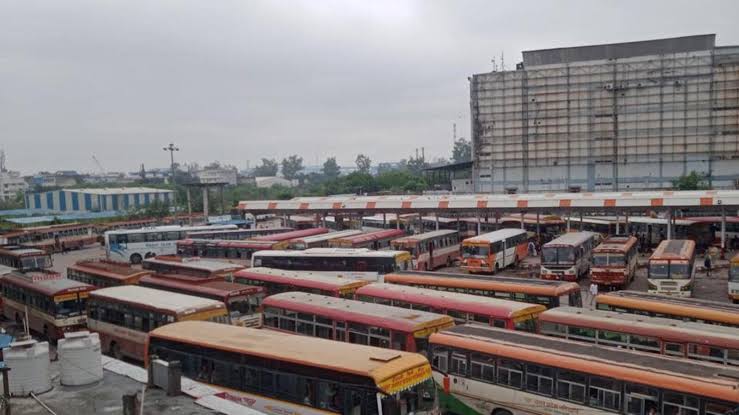
Ghaziabad occupies the first position east of Delhi in the NCR’s urban geography — not a suburb but a full industrial and commercial city of considerable size, handling the overflow of Delhi’s manufacturing and logistics economy along the GT Road corridor while simultaneously absorbing the residential spill of the capital’s eastern commuter belt. Its bus stations reflect this dual character: transit infrastructure serving both local Ghaziabad residents and the enormous through-passenger traffic that moves between Delhi and eastern UP on one of India’s most densely traveled road corridors.
The primary UPSRTC bus station is at Hapur Road, Navyug Market, Naya Ganj, Ghaziabad — 201001. Ghaziabad actually has three significant UPSRTC facilities: the Old Bus Station on Hapur Road (10,000 square metres), ISBT Sahibabad (15,000 square metres), and ISBT Kaushambi (24,284 square metres). All three are undergoing redevelopment under UPSRTC’s statewide PPP-based upgrade initiative, at costs of ₹62 crore, ₹161 crore, and ₹261 crore respectively. Kaushambi ISBT is in the transit-oriented development (TOD) zone due to its proximity to both the Delhi Metro Red Line and the Namo Bharat RRTS, giving it a multi-storey development framework with 45% commercial area to recover the construction cost. Three stations handle 30,000 to 40,000 daily passengers collectively. UPSRTC operates 878 buses from Ghaziabad including Volvo luxury services.
Current Status: All three stations operational. Redevelopment tenders under PPP model issued. Kaushambi and Sahibabad ISBT redevelopments aligned with RRTS transit zone. Completion timelines delayed from initial 18-month target.
Overview Table
| Detail | Information |
| Primary Station Name | Bus Station Ghaziabad / Old Bus Stand |
| Location | Hapur Road, Navyug Market, Naya Ganj, Ghaziabad, Uttar Pradesh — 201001 |
| Other Stations | ISBT Kaushambi (24,284 sqm); ISBT Sahibabad (15,000 sqm) |
| Operated By | UPSRTC |
| Combined Daily Passengers | 30,000–40,000 across three stations |
| UPSRTC Fleet in Ghaziabad | 878 buses including Volvo services |
| Redevelopment Status | All three under PPP redevelopment (Old: ₹62 cr; Sahibabad: ₹161 cr; Kaushambi: ₹261 cr) |
| Key Routes | Delhi (Anand Vihar), Lucknow, Dehradun, Moradabad, Meerut, Hapur, Bulandshahr |
| Metro Connectivity | Shaheed Sthal (New Bus Adda) — Red Line terminus, Delhi Metro |
| RRTS Connectivity | Ghaziabad RRTS Station (Namo Bharat) — Sahibabad/Kaushambi zone |
| Distance from Delhi (Anand Vihar ISBT) | Approx. 12–15 km |
| Distance from Ghaziabad Railway Junction | Approx. 2–3 km |
| Distance from Noida | Approx. 15–20 km via NH-9 |
| Helpline | 1800 180 2877 (UPSRTC 24/7) |
| Governing Authority | UPSRTC |
Location
The Old Bus Stand on Hapur Road is in the Naya Ganj area — Ghaziabad’s historic commercial center. ISBT Kaushambi occupies the strategically superior location near the Kaushambi residential and commercial zone on the Delhi-Ghaziabad border, directly adjacent to the Delhi Metro Red Line’s Shaheed Sthal terminus and the Namo Bharat RRTS corridor. This proximity is the reason its redevelopment has the highest allocated budget and the most commercial development potential.
Directions
From Anand Vihar ISBT, Delhi: Travel eastward via NH-9 approximately 12 to 15 kilometres, 25 to 45 minutes — one of the NCR’s most congested road corridors with travel times varying dramatically by time of day.
From Ghaziabad Railway Junction: Travel approximately 2 to 3 kilometres to the Old Bus Stand by auto-rickshaw, 5 to 15 minutes.
From Noida: Travel northwestward approximately 15 to 20 kilometres, 30 to 50 minutes.
From Meerut: Travel southwestward via NH-58 approximately 65 kilometres, 1.5 to 2 hours.
Connectivity
Shaheed Sthal (New Bus Adda) metro station is the Red Line’s eastern terminus for Delhi Metro — the metro station is named after the bus stand area, reflecting the intended transit integration. Namo Bharat RRTS at Ghaziabad and Sahibabad stations connects the zone to Meerut in under an hour, adding high-speed rail connectivity that transforms travel toward the northeast. Ghaziabad Junction Railway Station handles Delhi Suburban Railway and long-distance trains.
Nearby Areas
Raj Nagar Extension: One of Ghaziabad’s rapidly developing residential zones is accessible from the Kaushambi ISBT corridor and represents the city’s aspirational residential geography. Shipra Mall: One of the region’s early large-format retail destinations near the Indirapuram zone is accessible from the Ghaziabad bus station zone. Sanjay Nagar: The IT and commercial zone of Ghaziabad near the Raj Nagar corridor adds a working professional demographic to the daily transit movement through the Kaushambi station zone.
Frequently Asked Questions (FAQs)
Q1. Where is the main Ghaziabad Bus Station?
Hapur Road, Navyug Market, Naya Ganj, Ghaziabad — 201001. Ghaziabad also has ISBT Kaushambi and ISBT Sahibabad serving different parts of the city.
Q2. What is the redevelopment plan for Ghaziabad bus stations?
All three stations are under PPP-based redevelopment — Old Station (₹62 cr), Sahibabad (₹161 cr), Kaushambi (₹261 cr). Kaushambi and Sahibabad are in RRTS transit development zones with multi-storey commercial development planned.
Q3. Which metro serves Ghaziabad Bus Station?
Shaheed Sthal (New Bus Adda) on Delhi Metro Red Line serves the Kaushambi/New Bus Stand zone. The station is named after the bus stand area.
Q4. How many daily passengers use Ghaziabad bus stations? 30,000 to 40,000 combined daily across the three stations.
Q5. Does Ghaziabad have RRTS (Namo Bharat) connectivity?
Yes — Ghaziabad RRTS Station and Sahibabad RRTS Station are operational on the Delhi-Meerut RRTS corridor, with the Kaushambi ISBT in the transit development zone.