
India’s machine-tool production crossed roughly ₹16,478 crore in FY 2025-26, while total machine-tool consumption topped ₹35,000 crore, reflecting just how central CNC machines have become to the country’s manufacturing story. This list of the top 10 CNC machine manufacturers in India 2026 covers the companies actually building this precision equipment, powering everything from automotive components to aerospace parts across factories nationwide.
What’s notable this year is how the market splits between established Indian machine-tool builders with decades of domestic manufacturing history and global technology giants running dedicated Indian operations. Here’s a clear look at who’s actually building the CNC machines behind India’s manufacturing boom.
Top 10 CNC Machine Manufacturers in India 2026: Quick Overview
| Company | Origin | Specialization | Notable Detail |
| Ace Designers (Ace Micromatic) | India (1979) | CNC turning centers | ~8,000 turning centers/year capacity |
| LMW (Lakshmi Machine Works) | India (1988) | Turning, machining, turnmill centres | First Indian CNC Turning Centre plant |
| Jyoti CNC Automation | India | VMC, HMC, turning centers | Major domestic manufacturer |
| BFW (Bharat Fritz Werner) | India | Machining centers, turning solutions | Established heavy engineering base |
| Macpower CNC Machines | India | Turning centers, VMC | Growing domestic manufacturer |
| HMT Machine Tools | India | Broad machine tool range | Legacy Indian manufacturer |
| Yamazaki Mazak India | Japan (India ops) | High-precision multi-industry CNC | Aerospace, automotive, medical |
| Hurco India | USA (India ops) | Advanced CNC control technology | 80+ global patents |
| Okuma India | Japan (India ops) | Precision CNC machinery | Trusted reliability reputation |
| Ethereal Machines | India | 5-axis CNC machines | Aerospace and healthcare focus |
1. Ace Designers (Ace Micromatic Group)
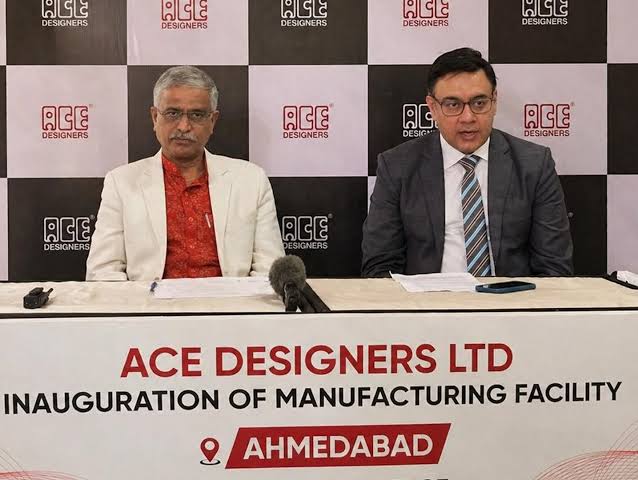
Ace Designers stands as the flagship machine-tool company within the broader Ace Micromatic Group, and its recent expansion reflects genuine confidence in India’s manufacturing growth.
- Founded in 1979, with a long-standing presence particularly strong in CNC turning technology
- Opened a new assembly facility in Ahmedabad in 2026, adding substantial future manufacturing capacity
- Existing capacity of approximately 8,000 turning centers and 3,400 machining centers annually
- Particularly relevant for manufacturers evaluating CNC turning for automotive, auto-component, and general engineering production
- Broader Ace Micromatic ecosystem spans machining, automation, grinding, and related manufacturing technologies
2. LMW (Lakshmi Machine Works)
LMW holds genuine historical significance in Indian CNC manufacturing, having established the country’s very first dedicated CNC machine tool plant.
- Established its Machine Tool Division in 1988, becoming the first plant in India to manufacture CNC Turning Centres
- Also manufactures Machining Centres and Turnmill Centres, covering multiple production process categories
- Positioned as a leading domestic manufacturer with decades of accumulated engineering expertise
- Diverse range of CNC machines backed by continued commitment to innovation and quality standards
3. Jyoti CNC Automation
Jyoti CNC has built a substantial position among India’s domestic CNC manufacturers, offering a genuinely broad range of machine types for varied production needs.
- Manufactures vertical machining centers (VMC), horizontal machining centers (HMC), and turning centers
- Serves automotive, aerospace, and general engineering sectors with in-house production equipment
- Positioned among the established Indian manufacturers offering comprehensive CNC equipment ranges
- Growing relevance as domestic manufacturers increasingly compete with imported alternatives
4. BFW (Bharat Fritz Werner)
BFW brings decades of heavy engineering credibility into CNC machining center manufacturing, serving India’s demanding industrial production needs.
- Offers machining centers and turning solutions built on established heavy engineering foundations
- Serves sectors requiring reliable, repeatable precision production equipment
- Long operating history reflects genuine manufacturing depth within India’s machine-tool sector
- Positioned as a dependable choice for buyers prioritizing established engineering credentials
5. Macpower CNC Machines
Macpower has grown into a genuinely relevant domestic manufacturer, offering turning centers and VMC equipment for India’s expanding production base.
- Manufactures turning centers and vertical machining centers for varied industrial applications
- Growing presence within India’s competitive domestic CNC manufacturing landscape
- Serves manufacturers seeking cost-effective, locally supported machining equipment
- Represents the continued expansion of India’s indigenous machine-tool manufacturing capacity
6. HMT Machine Tools
HMT carries genuine legacy weight in Indian machine-tool manufacturing, having played a foundational role in the country’s earlier industrialization.
- Offers a broad range of machine tools spanning multiple manufacturing process categories
- Long-established Indian manufacturer with decades of accumulated industrial heritage
- Continues serving manufacturers valuing established domestic engineering credentials
- Represents the historical backbone of India’s broader machine-tool manufacturing ecosystem
7. Yamazaki Mazak India
Yamazaki Mazak brings genuinely global precision manufacturing technology into India, serving some of the country’s most demanding production sectors.
- CNC machines well known for accuracy and access to the latest global manufacturing technology
- Serves aerospace, automotive, medical, and energy sector production needs
- Backed by Mazak’s international engineering resources and continuous technology development
- Positioned toward buyers needing internationally proven precision manufacturing capability
8. Hurco India
Hurco India extends its US parent company’s advanced CNC control technology directly into India’s precision manufacturing sector.
- Part of Hurco Companies Inc., a global CNC technology leader holding more than 80 patents worldwide
- Designs and manufactures CNC machines used across aerospace, automotive, and broader manufacturing sectors
- Known specifically for advanced control technology and precision engineering capability
- Established reputation for helping companies genuinely improve their production procedures
9. Okuma India
Okuma India has built trust specifically around reliable, precise CNC machinery backed by Japanese engineering discipline.
- Known for reliable, precise, and innovative CNC tools supporting improved production processes
- Established strong reputation across India’s broader CNC machine industry
- Positioned toward buyers prioritizing long-term reliability over aggressive pricing
- Backed by Okuma’s global manufacturing and engineering heritage
10. Ethereal Machines
Ethereal Machines represents the newer generation of Indian CNC manufacturers, focusing specifically on advanced 5-axis technology for specialized applications.
- Leading Indian manufacturer specifically of 5-axis CNC machines
- Offers high-performance, user-friendly solutions catering to aerospace and healthcare manufacturing sectors
- Positioned as a domestic alternative to imported 5-axis systems, often at more accessible pricing
- Reflects India’s growing capability in advanced, multi-axis precision manufacturing technology
Choosing the Right CNC Machine: What Actually Matters
Selecting the right manufacturer and machine type depends heavily on your specific production requirements:
- Match machine type to your primary process — turning centers suit cylindrical component production, while VMCs and HMCs handle more complex milling operations, and 5-axis machines suit intricate, multi-angle parts
- Consider domestic versus imported based on total cost of ownership — Indian manufacturers like Ace Designers or LMW often offer faster service response, while global brands like Mazak or Okuma bring proven precision at typically higher upfront cost
- Evaluate spindle speed and precision tolerance against your component requirements — aerospace and medical applications need significantly tighter tolerances than general engineering production
- Ask about local service network and spare parts availability — machine downtime in continuous production environments can be costly, so nearby technical support matters as much as machine specifications
- Factor in operator training and control system familiarity — some control systems have steeper learning curves, which affects both training time and operational efficiency for your team
FAQs
Q1. What’s the difference between a VMC and an HMC, and which should I choose?
A Vertical Machining Center (VMC) holds the cutting tool vertically, working well for simpler, flatter component geometries and generally costing less. A Horizontal Machining Center (HMC) offers better chip evacuation and is better suited for complex, high-volume production runs, though typically at higher initial investment.
Q2. Should a small manufacturing business buy an Indian-made CNC machine or an imported one?
For most standard turning and milling applications, established Indian manufacturers like Ace Designers or LMW offer comparable precision at lower cost with faster local service response. Imported machines from Mazak, Okuma, or Hurco make more sense specifically for aerospace, medical, or other applications requiring internationally certified precision tolerances.
Q3. How often should a CNC machine be serviced to avoid unexpected production downtime?
Most manufacturers recommend routine maintenance checks every 200-300 operating hours, alongside more comprehensive servicing every six months to a year depending on usage intensity. Skipping scheduled maintenance is one of the most common causes of unexpected spindle or precision issues that halt production.
Q4. Is it worth investing in a 5-axis CNC machine for a business currently using 3-axis equipment?
5-axis machines from manufacturers like Ethereal Machines make sense specifically for complex geometries, aerospace components, or intricate medical parts requiring multiple angles in a single setup. For simpler, flatter component production, upgrading to 5-axis adds significant cost without proportional benefit, making 3-axis or turning centers more practical.