
India’s Supreme Court had to directly intervene in 2026, pulling up the Food Safety and Standards Authority of India for failing to finalise front-of-pack warning labels after more than a decade of consultation, a genuinely striking sign of how much is actually riding on getting food labelling right. Understanding what’s currently on Indian packaged food labels, what’s still missing, and why regulators consider this such a high-stakes public health issue reveals a lot about the gap between the information consumers need and what they actually get at the point of purchase.
What Indian Food Labels Are Already Required to Show
Food labelling in India is governed primarily by the FSS (Labelling and Display) Regulations 2020, which set out fourteen mandatory declarations that must appear on every pre-packaged food item. These span the basics, product name, complete ingredient list, and manufacturer’s name and address, alongside more specific requirements like date marking (either a “Best Before” date for products with shelf life under three months, or a “Use By” date for perishables), country of origin for imported foods, and the FSSAI licence number confirming the manufacturer is registered and compliant.
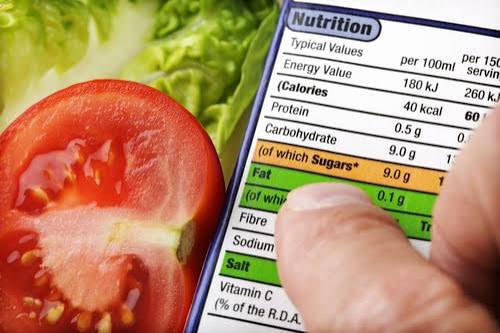
Nutrition information specifically must be declared per 100 grams or millilitres and per serving, with separate disclosures required for added sugar, trans fat, and sodium content, giving consumers the raw data needed to compare products directly. Eight major allergens, including cereals containing gluten like wheat, rye, barley, and oats, must be highlighted prominently, either in bold, italic, or a different colour within the ingredients list, with a separate “Contains: [allergen]” statement also required nearby, a genuinely important safeguard for the meaningful share of the population managing food allergies or intolerances.
Why This Information Genuinely Matters to Consumers
The core function of any food label is straightforward: it lets shoppers make an informed comparison between products without needing specialised nutrition training or guesswork. A 2021 multi-centric study surveying consumers across 14 Indian states specifically examined how front-of-package food labels help people make healthier choices at the point of purchase, confirming that giving consumers direct visibility into nutrient content genuinely shapes purchasing behaviour when that information is clear and accessible.
This matters considerably more in India’s current food environment than it might have a generation ago, given rising consumption of ultra-processed foods, chips, sugary drinks, instant noodles, and packaged snacks, that are often engineered to be high in fat, sugar, and salt simultaneously. Public health experts specifically note that these products are deliberately designed to be highly appealing to taste, interfering with the body’s natural satiety centre, the brain mechanism that signals when a person is full, making clear labelling a genuinely important counterweight to products engineered to encourage overconsumption.
The Front-of-Pack Labelling Debate Still Being Fought
This is where India’s labelling framework remains genuinely unsettled, and the gap matters. FSSAI first began work on front-of-pack nutrition labelling more than a decade ago, and a parliamentary standing committee on Consumer Affairs, Food and Public Distribution has since urged the regulator to notify Front-of-Pack Nutrition Labelling (FOPNL) regulations, recommending clearly visible interpretative labels, including colour-coded indicators denoting high, medium, or low sugar levels, or explicit warning labels for products high in sugar specifically.
FSSAI’s own draft proposal, called the Indian Nutrition Rating, rates packaged foods from half a star (least healthy) to 5 stars (most healthy) based on a combination of positive nutrients, protein, fibre, and fruit or vegetable content, weighed against negative nutrients like energy, saturated fat, total sugar, and sodium, modelled directly on Australia’s Health Star Rating system. That proposal received over 14,000 public comments, reflecting genuinely intense public interest, but FSSAI has separately signalled it’s reconsidering star-rating in favour of a more direct tabular or pictorial format specifically highlighting foods high in fat, sugar, and salt (HFSS), and as of the most recent filings, the regulator has still not finalised which approach it will adopt.
Why Regulators Are Torn Between Warning and Educating
The genuine tension driving this delay is philosophical as much as technical: public health advocates have consistently pushed for prominent, interpretative warning symbols that clearly alert consumers the moment they pick up a product containing excessive sugar, salt, or saturated fat, an approach that treats labelling as a protective intervention. FSSAI, meanwhile, has leaned toward positive or composite scoring systems like its proposed star rating, arguing these can educate and guide consumers toward better choices rather than simply flagging products as bad.
That distinction matters practically, since a stark warning label (similar to systems used in Chile or Mexico) tends to produce faster, more decisive changes in consumer behaviour, while a star-rating or scoring system requires consumers to actively interpret and compare numbers, a genuinely higher cognitive burden that may reduce its real-world impact even if it feels less punitive to food manufacturers.
Recent Tightening Around Misleading Claims
Beyond the still-unresolved front-of-pack question, FSSAI’s 2026 amendments have closed several specific loopholes that previously allowed misleading marketing. The regulator moved to ban unsubstantiated “100% Natural” claims, removing what had become one of the most commonly used pieces of marketing misdirection on Indian shelves, formalising what many consumers had already learned to treat with reasonable skepticism. The FSS (Advertising and Claims) Regulations 2018 separately set quantitative thresholds that must be met before a product can legally claim to be a “source of” a nutrient, “high in” a nutrient, or “free of” a specific ingredient, with all such claims requiring analytical substantiation rather than simply being asserted on packaging.
What Consumers Can Actually Do Right Now
While the front-of-pack warning framework remains unresolved, the practical takeaway for Indian consumers is that meaningful information is already available on every package, it just requires actively reading the back-of-pack nutrition table rather than relying on a quick front-of-pack glance. The ingredient list, FSSAI licence number, the mandatory green or brown dot indicating vegetarian or non-vegetarian status, and the date marking are all already present and legally required, giving genuinely attentive shoppers real tools to compare products even before any interpretative front-of-pack system gets finalised.
The Bottom Line
Food labels give consumers the raw data, ingredients, nutrition values, allergens, and manufacturer accountability, needed to make genuinely informed comparisons between products, but India’s ongoing struggle to finalise a clear, consumer-friendly front-of-pack warning system, now under direct Supreme Court pressure after more than a decade of delay, shows just how much the format of that information matters as much as its mere existence. Until FSSAI settles on either a star-rating or a direct warning-label approach for foods high in fat, sugar, and salt, Indian consumers genuinely benefit most by actively checking the detailed nutrition information already required on every package rather than waiting for a simplified front-of-pack signal to arrive.
Frequently Asked Questions
Q1. Does every packaged food in India currently show clear warnings for high sugar or salt content?
A: Not yet in a standardised, mandatory front-of-pack format; FSSAI is still finalising whether to use a star-rating system or a direct warning label, so consumers currently need to check the detailed nutrition table, which does mandatorily disclose added sugar, sodium, and trans fat content per 100g and per serving.
Q2. How can I quickly identify if a packaged food contains an allergen I need to avoid?
A: Indian regulations require the 8 major allergens, including gluten-containing cereals, to be highlighted in bold, italic, or a different colour within the ingredients list, plus a separate “Contains: [allergen]” statement nearby, making allergen information easier to spot than general nutrition data.
Q3. Can food companies in India still claim their product is “100% Natural” if it isn’t?
A: No, FSSAI’s 2026 amendments specifically banned unsubstantiated “100% Natural” claims, and any nutrient-related marketing claim like “high in protein” or “source of fibre” must now meet quantitative thresholds and be analytically substantiated rather than simply asserted.
Q4. Why has India taken so long to introduce front-of-pack warning labels compared to other countries?
A: FSSAI has spent over a decade weighing a positive, educational star-rating approach (similar to Australia’s Health Star Rating) against a more direct warning-label system for high fat, sugar, and salt foods, with the Supreme Court and a parliamentary committee both recently pressing the regulator to finally commit to one approach.
Q5. What’s the single most useful piece of information to check on a food label right now?
A: The detailed nutrition table showing added sugar, sodium, and saturated fat per 100g or per serving is currently the most reliable, already-mandatory data point for comparing packaged foods, since a definitive front-of-pack warning or rating system has not yet been finalised nationally.