
Mumbai alone hosts over 50,000 vada pav stalls — a single city, a single dish, and enough of it to feed the imagination of what “street food” actually means in India. Across the country, every intersection, railway station, and market lane carries its own version of this culture, where a ₹15 snack can taste as memorable as a full restaurant meal. Understanding which dishes dominate this landscape genuinely helps you know what to seek out, whether you’re a local rediscovering old favorites or a visitor planning your first food-focused trip.
| Rank | Dish | Region Most Associated | What Makes It Distinctive |
| 1 | Pani Puri (Golgappa/Puchka) | Nationwide, especially Mumbai | Crispy shell, tangy tamarind-mint water |
| 2 | Vada Pav | Mumbai | “Indian burger,” potato fritter in a bun |
| 3 | Pav Bhaji | Mumbai | Buttery mashed vegetable curry with bread |
| 4 | Samosa | Nationwide | Fried pastry with spiced potato filling |
| 5 | Chole Bhature | Delhi, Punjab | Spicy chickpea curry with fried bread |
| 6 | Bhel Puri | Mumbai | Puffed rice, chutneys, sev mix |
| 7 | Dahi Puri | Mumbai, nationwide | Yogurt-filled cooler alternative to pani puri |
| 8 | Momos | Northeast India, nationwide | Steamed/fried dumplings, Himalayan origin |
| 9 | Dahi Vada | North India | Lentil fritters in creamy yogurt |
| 10 | Pakoda | Nationwide, especially monsoon season | Deep-fried vegetable/meat fritters |
1. Pani Puri — India’s Most Beloved Street Snack
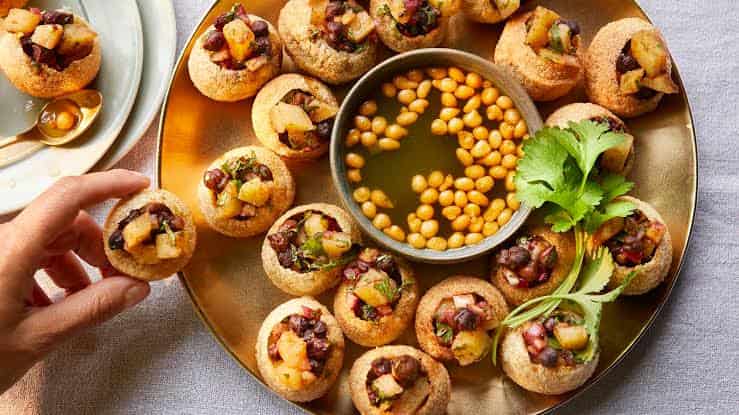
Known by different names across the country, pani puri consistently ranks as the single most iconic Indian street food experience.
- Consists of crispy, hollow puri shells filled with spiced potatoes, chickpeas, and tangy tamarind chutney, finished with a shot of spicy mint-cilantro water just before eating.
- Goes by regional names including puchka in Bengal, golgappa in North India, gol gappe, and pani batasha, reflecting how deeply localized this single dish has become across the country.
- The genuine appeal lies in the sequence — each puri is meant to be eaten whole in one bite, delivering a burst of contrasting textures and flavors instantly.
2. Vada Pav — The Poor Man’s Burger
- Consists of a deep-fried potato fritter (vada) sandwiched inside a soft bread bun (pav), spread with garlic chutney and served with fried green chilies.
- Mumbai alone hosts more than 50,000 vada pav stalls, making it genuinely the city’s defining street food, priced accessibly enough for virtually anyone to afford.
- For generations of Mumbai commuters, it’s remained the go-to grab-and-eat meal, often consumed literally while running to catch a train or cab.
3. Pav Bhaji — Mumbai’s Buttery Comfort Food
- A spicy vegetable mash cooked in a tomato-based gravy, loaded with butter, and served alongside soft, butter-toasted bread rolls (pav).
- Genuinely beloved for its rich, comforting flavor profile, often garnished with raw onions, a wedge of lemon, and an extra dollop of butter for good measure.
- Considered one of the most quintessentially Mumbai dishes, with dedicated pav bhaji stalls found across nearly every neighborhood in the city.
4. Samosa — The Nationwide Constant
- A fried pastry filled with spiced potatoes (and sometimes peas or minced meat), samosa is genuinely the one street food you’ll find virtually everywhere across India, regardless of region.
- Often recommended as the single dish to try first if visiting India for street food specifically, given its universal availability and consistent popularity nationwide.
- Typically served with tangy tamarind or mint chutney, and pairs particularly well with a hot cup of chai.
5. Chole Bhature — Delhi and Punjab’s Hearty Favorite
- Built around chole (chickpeas cooked in traditional spices) served alongside bhature, a fried flatbread made from maida (refined flour).
- Genuinely dominant in Delhi and Punjab specifically, with entire streets in the capital lined with dedicated chole bhature stalls near metro stations and office areas.
- Typically topped with pickle and a fresh onion salad, making each bite a wholesome combination of tangy, spicy, and hearty flavors.
6. Bhel Puri — Mumbai’s Crunchy Classic
- Combines crispy puffed rice, fried chickpea-flour noodles (sev), and multiple sweet-tart chutneys, sometimes tossed with beans and fresh herbs.
- The finished dish genuinely resembles a tossed rice pilaf, eaten either directly or scooped up with papdi or puris.
- A particular favorite among Mumbai diners specifically, valued for its distinctive textural contrast between crunchy and soft elements in every bite.
7. Dahi Puri — The Cooler Alternative to Pani Puri
- Offers a milder, calmer version of the pani puri experience, with puris filled with yogurt, chutneys, and spices instead of the traditional spicy water.
- The combination of creamy yogurt and crispy puri creates a genuinely refreshing balance, particularly appealing to those who prefer subtler flavors over pani puri’s intensity.
8. Momos — The Himalayan Import Turned National Favorite
- Uses thin, flour-based dough filled with meat, vegetables, or a mix of both, either steamed or fried depending on preference.
- The dish’s history is believed to trace back to Nepal, traveling through the Himalayas before becoming a genuinely beloved part of India’s broader street food landscape.
- Now found across cities nationwide, momos have moved well beyond their Northeast Indian origins into mainstream popularity across virtually every major Indian city.
9. Dahi Vada — North India’s Ancient Street Classic
- Composed of crispy lentil fritters coated in creamy yogurt, creating a striking, almost luxurious appearance despite its street food origins.
- Some accounts trace this dish’s history back as far as 500 BC, making it one of the oldest continuously enjoyed street foods on this entire list.
- Often garnished with golden raisins, crushed spices, or chutney, adding genuine visual and flavor complexity to the finished plate.
10. Pakoda — The Monsoon Season Staple
- Deep-fried fritters made by dipping various ingredients — chili, onion, potato, cabbage, spinach, eggplant, paneer, or meat — into a seasoned batter.
- Shares a genuinely deep cultural connection with India’s monsoon season specifically, best enjoyed alongside a hot cup of chai — a pairing significant enough to spawn dedicated “Chai-Pakoda” joints across metropolitan cities.
Eating Street Food Safely While Traveling in India
- Choose stalls with heavy local foot traffic, since high turnover generally means fresher ingredients and quicker preparation cycles.
- Prioritize food that’s cooked in front of you at high heat — samosas straight from the fryer, dosa off a hot griddle, or continuously boiling chai — over pre-prepared items sitting out.
- Avoid raw salads, chutneys left sitting in the sun, and ice of uncertain origin, particularly if you’re new to the specific region’s food environment.
- Roughly 70% of Indian street food is vegetarian by default, making it genuinely accessible for vegetarian travelers without much special searching required.
The Bottom Line
From Mumbai’s vada pav and pav bhaji to Delhi’s chole bhature and the nationwide ubiquity of pani puri and samosa, India’s street food landscape reflects genuine regional identity as much as shared national culture — each dish carrying its own history, from ancient dahi vada to Himalayan-origin momos now beloved countrywide. Whether you’re exploring a specific city’s signature dish or simply following your curiosity from one stall to the next, India’s street food scene remains one of the most affordable, flavorful, and genuinely immersive ways to experience the country’s culinary diversity firsthand.
FAQs
Q1. Which single street food dish should I try first if I’m new to Indian street food?
Samosa is widely recommended as the best starting point, given its nationwide availability, mild spice level, and consistent quality across regions.
Q2. Is it true that most Indian street food is vegetarian?
Yes, approximately 70% of Indian street food is meat-free by default, making it genuinely accessible for vegetarian travelers without extensive searching.
Q3. Why does the same dish, like pani puri, have so many different names across India?
Regional languages and local culinary traditions have shaped distinct names for identical or near-identical dishes, reflecting India’s genuine linguistic and cultural diversity.
Q4. How can I tell if a street food stall is safe to eat from while traveling?
Look for high local foot traffic, food cooked fresh at high heat in front of you, and avoid items that have been sitting out for extended periods.