
A ₹50 dividend missing from your return triggers exactly the same automated mismatch alert as a much larger gap — a genuinely useful reminder that with FY 2025-26 (AY 2026-27) returns due by July 31, 2026, the Income Tax Department’s systems now cross-check virtually everything against data it already receives from your banks, employers, brokers, and mutual fund registrars. The same errors show up year after year during filing season, and tax experts consistently say nearly all of them are entirely preventable with a bit of upfront care.
| Rank | Mistake | Genuine Consequence |
| 1 | Choosing the Wrong ITR Form | Return marked defective (Section 139(9) notice) |
| 2 | Data Mismatch with AIS/Form 26AS | Automated query, revised return required |
| 3 | Underreporting Income (interest, dividends, rent) | Notice, additional tax liability |
| 4 | Incorrect/Ineligible Deduction Claims | Penalties, additional tax |
| 5 | Wrong Assessment Year | Double taxation risk, penalties |
| 6 | Failing to E-Verify the Return | Return treated as not filed |
| 7 | Not Reporting Foreign Assets/Income | Serious penalties under Black Money Act |
| 8 | Incorrect Personal/Bank Details | Refund delays, PAN mismatch issues |
| 9 | Missing Mandatory Forms (10B/10BB, Form 67) | Denied exemption/credit claims |
| 10 | Last-Minute Filing Under Time Pressure | Rushed errors, missed verification |
1. Choosing the Wrong ITR Form
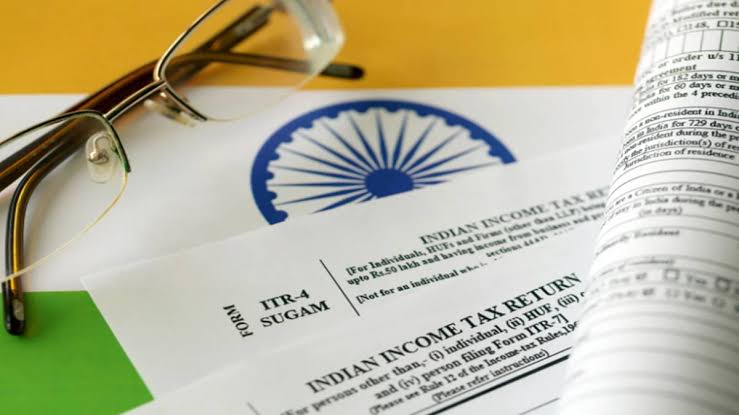
Selecting an incorrect ITR form remains consistently one of the most common mistakes, since different forms apply based on income sources like salary, business income, or capital gains.
- Salaried individuals with income under ₹50 lakh and no capital gains typically file ITR-1, while business owners generally file ITR-3 — using the wrong one can render the entire return defective.
- A defective return triggers an intimation under Section 139(9), giving taxpayers just 15 days to rectify the mistake before the return is treated as invalid.
- Using an e-filing platform that automatically determines the correct form based on your income details significantly reduces this specific risk.
2. Data Mismatch With AIS, TIS, and Form 26AS
- Most errors experts identify stem from mismatches between taxpayers’ own calculations and figures reflected in the Annual Information Statement (AIS).
- A genuinely common scenario: a taxpayer manually enters equity gains instead of using the broker-reported data already in AIS, triggering an automated query that requires filing a revised return.
- Always cross-check every pre-filled entry against your own records — the AIS frequently misses bank interest not linked under your PAN, updated capital gains, or rental income that was never captured in the system.
3. Underreporting Income
- Many taxpayers report only their salary income, forgetting to include interest income, dividends, rental income, or capital gains — all of which are typically already visible to the department through Form 26AS or AIS.
- Non-disclosure of exempt income and income from previous employers within the same financial year is another consistently cited oversight.
- Dormant bank accounts requiring disclosure are also frequently left out entirely, creating genuine gaps between what taxpayers report and what the department already knows.
4. Incorrect or Ineligible Deduction Claims
- Taxpayers sometimes claim deductions without proper supporting documentation, or misunderstand eligibility rules under sections like 80C, 80D, or 80G.
- Incorrect deductions can result in additional tax liability or penalties discovered later, since the department has increasingly focused scrutiny specifically on deductions and exemptions claimed in recent filing seasons.
5. Using the Wrong Assessment Year
- For income earned during FY 2025-26, the corresponding Assessment Year is 2026-27 — mentioning the wrong AY genuinely increases the risk of double taxation and unnecessary penalties.
- This mistake is entirely avoidable with basic attention to detail, yet remains a recurring issue every filing season.
6. Failing to E-Verify the Return
- A recurring oversight cited by tax experts involves taxpayers completing and submitting their return but failing to e-verify it afterward.
- An unverified return is treated as not filed at all, effectively nullifying all the effort put into preparing it correctly in the first place.
- E-verification can typically be completed instantly through Aadhaar OTP, net banking, or other digital methods, making this an entirely avoidable final-step error.
7. Not Reporting Foreign Assets and Income
- Under the Income Tax Act, resident and ordinarily resident Indians must report foreign income, assets, and accounts, yet many taxpayers skip this disclosure entirely.
- This carries genuinely serious consequences given India’s Black Money Act provisions, and the department may initiate scrutiny for underreported income within four years of the tax year, with a considerably longer window for foreign assets specifically.
8. Incorrect Personal and Bank Details
- Personal details — name, address, email, phone number, PAN, and date of birth — must be accurately entered and match PAN records exactly.
- If claiming a refund, bank account details including account number and IFSC code must be entered correctly, since errors here directly delay or block refund processing.
9. Missing Mandatory Supporting Forms
- Taxpayers frequently skip mandatory forms like Form 10B/10BB (for certain trusts/institutions) or Form 67 (for claiming foreign tax credit), along with regime-change forms when switching between old and new tax regimes.
- Missing these specific forms can result in denied exemption or credit claims even when the underlying eligibility genuinely exists.
10. Filing at the Last Minute Under Time Pressure
- Rushing through ITR filing in the final days before the deadline is consistently cited as a root cause behind multiple other mistakes on this list combined — wrong forms, mismatched TDS figures, and forgotten e-verification.
- A clean, accurate tax record matters considerably beyond just avoiding penalties — it directly affects loan applications, investor due diligence, and business credibility for freelancers, founders, and professionals alike.
What Happens If You Do Make a Mistake
- A defective return gives you the opportunity to correct it within the specified timeframe; failing to respond means the return is treated as invalid.
- You can file a revised return any number of times before the end of the relevant Assessment Year or completion of assessment, whichever comes first — for AY 2026-27, this window extends until 31st December.
- Missing the original filing deadline triggers a late fee under Section 234F — ₹1,000 for income up to ₹5 lakh, ₹5,000 above that — and forfeits your ability to carry forward capital or business losses for that year.
The Bottom Line
The most common Indian tax filing mistakes — wrong forms, AIS mismatches, underreported income, and skipped e-verification — share a common root cause: rushed, incomplete preparation rather than genuine complexity in the tax code itself. Since the department cross-checks virtually every entry against data it already receives from banks, employers, and brokers, taking time to reconcile your own records against Form 26AS and AIS before submission, and verifying immediately after filing, prevents the overwhelming majority of notices and delayed refunds taxpayers experience every season. This is general informational content, not personalized tax advice — given how frequently tax rules change, consulting a licensed tax professional about your specific situation before filing is genuinely worthwhile.
FAQs
Q1. What happens if I discover a mistake in my ITR after already e-verifying it?
You can file a revised return correcting the error, available any number of times before the assessment year ends or assessment completes, whichever comes first.
Q2. Why did I receive a notice for a small mismatch like a few hundred rupees in interest income?
The department’s automated system flags any mismatch regardless of amount, since even small discrepancies trigger the same verification query as larger gaps.
Q3. Is it safe to rely entirely on pre-filled data in my ITR without cross-checking it myself?
No, pre-filled AIS data frequently misses certain interest income, updated capital gains, or rental income, so manual verification against your own records remains essential.
Q4. What’s the actual deadline difference between ITR-1/ITR-2 and ITR-3/ITR-4 filers for FY 2025-26?
ITR-1 and ITR-2 filers must submit by July 31, 2026, while ITR-3 and ITR-4 filers, typically business owners, have until August 31, 2026.