
Kurnool carries a distinction that most Indian cities would be pleased to claim and just as pleased to have moved past — it was the first capital of Andhra State, serving from 1953 to 1956 before the capital shifted to Hyderabad. That three-year tenure as a state capital left Kurnool with the institutional infrastructure, administrative gravitas, and connectivity investment that defined its character through the subsequent decades. The city in the Tungabhadra-Krishna river confluence zone is now the district headquarters of Kurnool district in Rayalaseema — the drought-prone, historically underserved western Andhra belt whose resilience and political consciousness have been shaped by water scarcity and the agricultural determination that it demands.
The Kurnool Bus Station, also known as the Kurnool RTC Complex, is owned and operated by APSRTC on Ballari Road in Sampath Nagar. Opened in 1985, the station has 25 platforms across 3 bus stands in an arc-shaped multi-storied structure — a distinctive architectural form among Indian bus stations. It handles 80,000 passengers daily — a figure that makes Kurnool bus station one of Andhra Pradesh’s busiest outside Vijayawada’s PNBS. The station code is KNL, and the Kurnool-1 depot operates from the station premises with contact 08518-257082. Special pilgrim services to local temples operate from here with express connections. APSRTC and TGSRTC both serve the Kurnool-Hyderabad corridor — approximately 180 to 213 kilometres, 3.5 to 4 hours, with fares starting from ₹265 (APSRTC) — one of the station’s most commercially significant routes.
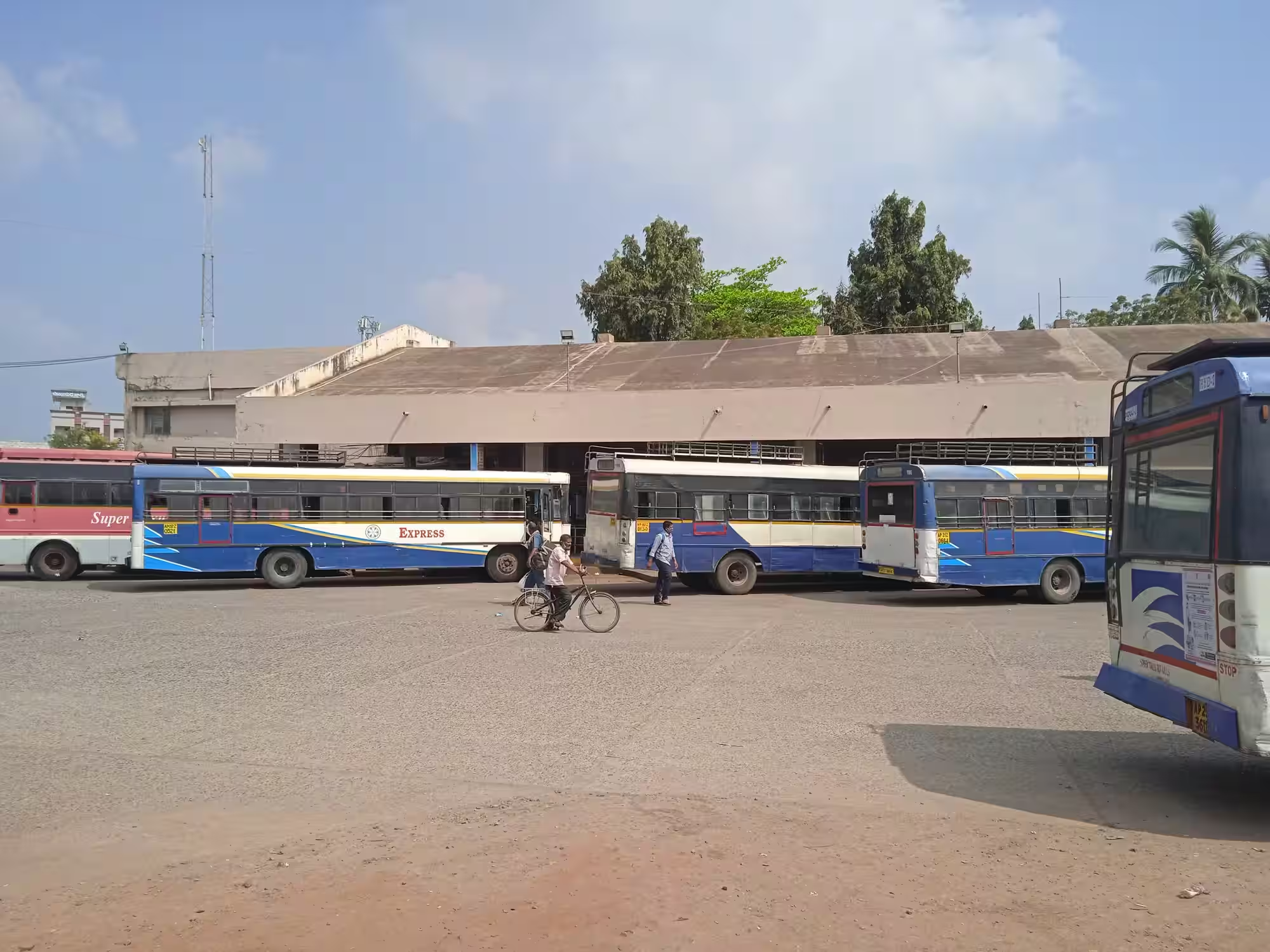
Kurnool Bus Station Overview
| Detail | Information |
| Name | Kurnool Bus Station / Kurnool RTC Complex |
| Location | Ballari Road, Sampath Nagar, Kurnool, Andhra Pradesh |
| Coordinates | 15°49’27″N 78°01’40″E |
| Elevation | 274 metres |
| Opened | 1985 |
| Owned By | APSRTC |
| Operated By | APSRTC (Primary); TGSRTC (Hyderabad corridor) |
| Station Code | KNL |
| Platforms | 25 across 3 bus stands |
| Architecture | Arc-shaped, multi-storeyed |
| Daily Passengers | 80,000 |
| Depot | Kurnool-1 Depot — on premises; Contact: 08518-257082 |
| Key Routes | Hyderabad, Bengaluru, Tirupati, Nandyal, Anantapur, Chennai |
| Hyderabad Distance | Approx. 180–213 km; 3.5–4 hours |
| Hyderabad Fare | From ₹265 (APSRTC); from ₹279 (TGSRTC) |
| Nearest Railway Station | Kurnool City Railway Station — Approx. 3–5 km |
| Nearest Airport | Kurnool Airport — Approx. 8–10 km |
Location
The bus station is on Ballari Road in Sampath Nagar — one of Kurnool’s central commercial zones positioned along the important road connecting the city southward toward Bellary in Karnataka. The arc-shaped multi-storied structure gives the station a visual identity that distinguishes it from the rectangular box-format designs that dominate most APSRTC facilities. Three distinct bus stands within the complex allow operational separation of different route categories.
Directions
From Kurnool City Railway Station: Travel approximately 3 to 5 kilometres by auto-rickshaw, 10 to 15 minutes.
From Kurnool Airport: Travel approximately 8 to 10 kilometres to the city center, 20 to 25 minutes by cab.
From Hyderabad MGBS/JBS: Travel southward via NH-44 and NH-167 approximately 180 to 213 kilometres, 3.5 to 4 hours by APSRTC or TGSRTC. Buses operate from 12:04 AM to 11:59 PM with continuous frequency.
From Bengaluru: Travel northward via the Karnataka-Andhra highway approximately 310 to 320 kilometres, 5 to 6 hours.
From Tirupati: Travel northwestward approximately 300 kilometres, 5 to 6 hours.
Connectivity
Kurnool City Railway Station provides rail connectivity on the South Central Railway network with trains to Hyderabad, Chennai, and connecting routes. Kurnool Airport handles limited scheduled services. The APSRTC-TGSRTC combination on the Hyderabad corridor — both state RTCs running services on this cross-state route — reflects the enormous daily traffic between Andhra Pradesh’s Rayalaseema zone and the Telangana capital. Pilgrim services to local temple destinations are a distinctive feature of Kurnool’s bus connectivity given the region’s concentration of significant pilgrimage sites.
Nearby Areas
Srisailam Dam and Temple: The massive hydroelectric dam on the Krishna River and the Mallikarjuna Jyotirlinga temple — one of India’s twelve sacred Jyotirlingas — is accessible from Kurnool by road. The combined dam-temple destination draws enormous pilgrimage and tourism traffic through the bus station. Ahobilam: The sacred Vaishnava shrine in the Nallamala forest hills where Lord Narasimha is worshipped in nine forms is another significant pilgrimage destination accessible from the Kurnool bus network. Yaganti Temple: The Yaganti Uma Maheshwara temple near Nandyal, famous for the naturally growing Nandi bull sculpture, is accessible by bus from Kurnool.
Frequently Asked Questions (FAQs)
Q1. Where is Kurnool Bus Station located?
Ballari Road, Sampath Nagar, Kurnool, Andhra Pradesh. Station code KNL, depot contact 08518-257082.
Q2. How many passengers use Kurnool Bus Station daily?
80,000 — making it one of Andhra Pradesh’s busiest bus stations outside Vijayawada’s PNBS.
Q3. What is unique about Kurnool Bus Station’s architecture?
It is built in an arc-shaped, multi-storied structure with 25 platforms across 3 bus stands — distinctive among APSRTC terminals.
Q4. How far is Kurnool from Hyderabad and what is the fare?
About 180 to 213 km, 3.5 to 4 hours. APSRTC fares start from ₹265 and TGSRTC from ₹279.
Q5. Which pilgrim destinations are accessible from Kurnool Bus Station?
Srisailam (Jyotirlinga temple), Ahobilam (Narasimha shrine), and Yaganti are among the major pilgrim destinations served by APSRTC special buses from Kurnool.