
Surat has never been a city that understates its commercial ambitions. The diamond polishing capital of the world — where approximately 90% of the world’s rough diamonds are cut and polished — and one of India’s fastest-growing cities, Surat’s economic energy is visible in the density of its commercial streets, the variety of its migrant worker communities from across India, and the infrastructure investment that a city generating this much economic output eventually demands. The Surat Central GSRTC Bus Terminal on Suryapur Gate, near the railway station at Lal Darwaja, is where this commercial city’s road mobility concentrates.
The terminal, located at coordinates 21°12’14″N 72°50’23″E, is managed by GSRTC with 12 platforms handling bus routes to Gujarat, Rajasthan, Maharashtra, Madhya Pradesh, Uttar Pradesh, and Dadra and Nagar Haveli. Multiple state operators share the facility — GSRTC, RSRTC, MSRTC, MPSRTC, and UPSRTC all operate services here, making Surat Central one of the most multi-state accessible bus terminals in western India. The terminal’s connectivity map reflects Surat’s economic geography — Ahmedabad to the north on the highway is a high-frequency route, Vadodara is intermediate, Mumbai to the south draws the enormous migrant worker traffic that sustains the city’s labour-intensive industries, and the Rajasthan connection carries the Marwari merchant community’s regular movement between their origin states and Gujarat’s commercial capital. Surat Metro, while still under development with trials in progress as of 2025, will eventually connect the bus station zone to the metro network.
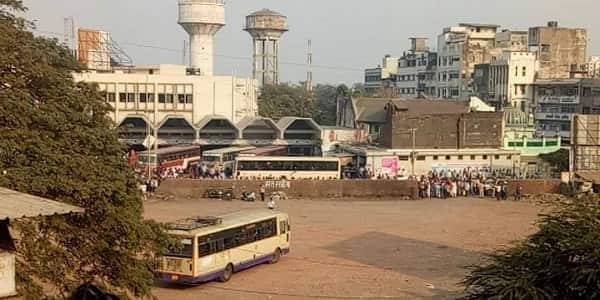
Surat Bus Station Overview
| Detail | Information |
| Official Name | Surat Central GSRTC Bus Terminal / Surat Central Bus Station |
| Location | Near Surat Railway Station, Suryapur Gate, Lal Darwaja, Surat, Gujarat — 395003 |
| Coordinates | 21°12’14″N 72°50’23″E |
| Operated By | GSRTC (Primary); RSRTC; MSRTC; MPSRTC; UPSRTC |
| Platforms | 12 |
| Key Interstate Routes | Rajasthan, Maharashtra, Madhya Pradesh, Uttar Pradesh |
| Key Intrastate Routes | Ahmedabad, Vadodara, Rajkot, Bhavnagar, Bharuch, Navsari, Valsad |
| Nearest Railway Station | Surat Railway Station — Adjacent (same compound area) |
| Nearest Airport | Surat Airport — Approx. 5–8 km |
| Distance from Ahmedabad | Approx. 265–270 km via NH-48 |
| Distance from Vadodara | Approx. 130 km |
| Distance from Mumbai | Approx. 265 km |
| Distance from Rajkot | Approx. 380 km |
| Surat Metro | Under development; will add metro connectivity when operational |
| Surat BRTS | Janmarg BRTS operates in Surat and connects to the bus terminal zone |
| Facilities | Large waiting area, multiple platforms, advance booking counters, food stalls, security |
| Governing Authority | GSRTC |
Location
The bus station is adjacent to Surat Railway Station in the Suryapur Gate area of central Surat — one of the city’s most historically significant and commercially active zones. The Lal Darwaja locality, named after the historic gate in the old city wall, carries the cultural memory of Surat’s ancient fortification while hosting thoroughly modern commercial and transit activity. The proximity to Surat Railway Station — one of Western Railway’s important intermediate stations on the Mumbai-Ahmedabad mainline — creates the standard Gujarat city combination of railway station and GSRTC bus terminal occupying essentially the same transit precinct.
Directions
From Surat Railway Station: Walk directly to the bus terminal — the two share the same Suryapur Gate zone and are separated by only a few hundred metres.
From Surat Airport: Travel toward the city center approximately 5 to 8 kilometres, 15 to 25 minutes by cab.
From Ahmedabad Gita Mandir: Travel southward on NH-48 approximately 265 to 270 kilometres, 3.5 to 4.5 hours by GSRTC.
From Mumbai: Travel northward via the Mumbai-Ahmedabad highway approximately 265 kilometres, 4 to 5 hours. Mumbai-bound buses on this corridor are among Gujarat’s most commercially significant routes.
From Vadodara: Travel southward approximately 130 kilometres, 2 to 2.5 hours by GSRTC.
Connectivity
Surat Railway Station on Western Railway’s Mumbai-Ahmedabad mainline — handling the Gujarat Queen, multiple intercity expresses, and the Rajdhani/Shatabdi passing through — provides strong rail connectivity in both directions. Surat Metro under development will eventually integrate with the city’s public transport network. Surat BRTS (Janmarg) provides rapid bus connectivity across the city’s corridors, supplementing the GSRTC intercity network with urban mobility.
Nearby Areas
Diamond Bourses and Cutting Centers: Surat’s extraordinary diamond industry — processing 90% of the world’s rough diamonds in its cutting and polishing workshops — is concentrated in the Varachha, Katargam, and industrial belt zones accessible from the bus station via BRTS and city buses. The Surat Diamond Bourse, India’s largest commercial complex, opened in 2023. Textile Market: Surat’s position as India’s largest textile producing and trading city is visible in the wholesale cloth markets of the Ring Road and Kapodra zones — traders from across India arrive and depart through the bus station regularly. Dutch Cemetery and Old Port Area: Surat’s extraordinary 400-year history as a major Indian Ocean trading port is preserved in the Dutch and Armenian cemeteries and the old Muglisara waterfront zone near the Tapi River.
Frequently Asked Questions (FAQs)
Q1. Where is Surat Central GSRTC Bus Station located?
A: Suryapur Gate, Lal Darwaja, near Surat Railway Station, Surat, Gujarat — 395003. Adjacent to Surat Railway Station.
Q2. How many platforms does Surat Central Bus Station have?
A: 12 platforms serving GSRTC and interstate operators including RSRTC, MSRTC, MPSRTC, and UPSRTC.
Q3. Which states’ buses operate from Surat Central?
A: Gujarat (GSRTC), Rajasthan (RSRTC), Maharashtra (MSRTC), Madhya Pradesh (MPSRTC), and Uttar Pradesh (UPSRTC).
Q4. How far is Surat from Ahmedabad by bus?
A: About 265 to 270 km via NH-48, taking 3.5 to 4.5 hours by GSRTC.
Q5. Is Surat Metro connected to the bus station?
A: Surat Metro is under development as of 2025. When operational it will add metro connectivity to the bus station zone.